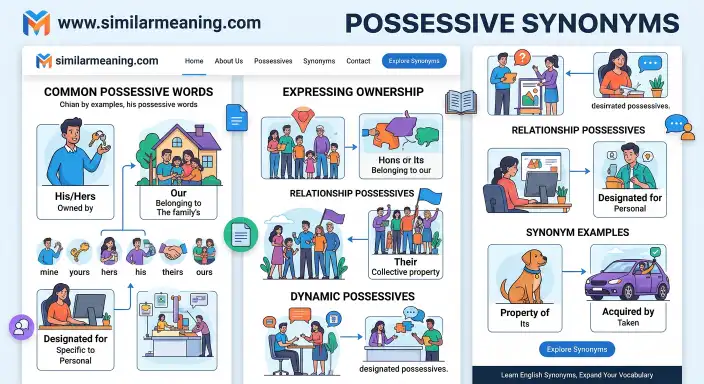
Possessive synonyms are words and expressions that describe a person who wants to keep something or someone close and does not like sharing or losing control. For example, a person may feel possessive when a friend spends time with other people. A possessive person may want extra attention, control, or reassurance.
The word possessive is common in daily conversations, relationships, books, and English writing. However, its meaning changes with context. It can describe a strong desire to own something, an unhealthy need for control, or a grammatical form that shows ownership.
Learning possessive synonyms helps English learners express these ideas clearly and avoid repeating the same words. This guide explains the meaning, pronunciation, history, grammar, and 30 synonyms of possessive, with simple examples, word categories, antonyms, and useful writing tips.
Meaning of Possessive
Definition
Possessive (adjective): Wanting to own, keep, or control something or someone, sometimes without allowing others much freedom.
Possessive (noun): A grammatical word or form that shows ownership or a relationship, such as my, your, or Sarah’s.
Examples
- He became possessive when his best friend made new friends.
- The word my is a possessive determiner in the sentence “My book is on the table.”
Connotative Meaning
Connotation (the feelings or ideas a word suggests beyond its basic meaning) depends on how the word is used.
- Positive tone: It may suggest care, attachment, or a strong wish to protect something, although protective is often a better word for a positive meaning.
- Negative tone: It can suggest jealousy, control, insecurity, or an unwillingness to share.
- Neutral tone: In grammar, possessive simply describes a form that shows ownership or a relationship.
Etymology
- Source language: Possessive comes through Old French and Latin.
- Latin root: Latin possidēre means “to possess” or “to own.”
- Word development: Latin possessivus relates to possession or ownership.
- Modern meaning: English uses possessive for ownership, controlling behavior, and grammatical forms that show possession.
Short History of Possessive
- Old English (450–1100): English used forms of pronouns and other grammatical structures to express ownership. The modern word possessive was not an established Old English term.
- Middle English (1100–1500): French and Latin influences helped expand English vocabulary related to ownership and possession.
- Modern English (1500–present): Possessive became established in grammar and everyday language. Today, it can describe both ownership and a person’s desire to control something or someone.
Pronunciation (US and UK – IPA)
- US: /pəˈzes.ɪv/
- UK: /pəˈzes.ɪv/
Syllables
pos sess ive — 3 syllables.
Affixation Pattern of Possessive
- Root: possess — to own or have something.
- Prefix: None in the word possessive.
- Suffix: ive — forms an adjective that describes a quality, tendency, or relationship.
- Word formation: The word belongs to a family of related grammatical forms.
Related words and grammatical categories:
- Possess (verb): To own or have something.
- Possession (noun): Something owned or the state of owning something.
- Possessor (noun): A person who owns or holds something.
- Possessive (adjective): Showing ownership or a desire for control.
- Possessively (adverb): In a possessive manner.
- Possessiveness (noun): The quality or behavior of being possessive.
- Possessives (plural noun): Words or forms that show ownership.
Synonyms of Possessive: 30 Powerful Words
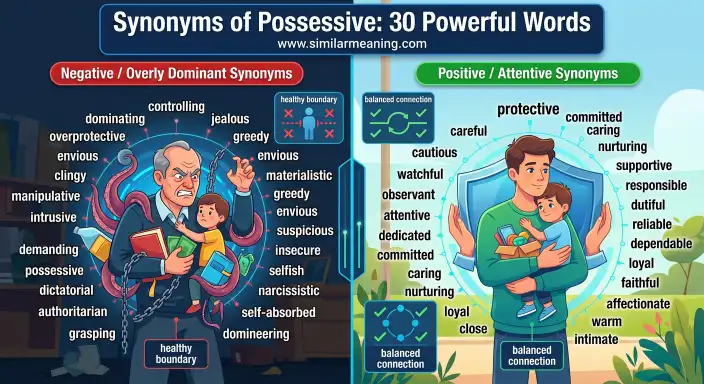
The following words can describe ownership, attachment, jealousy, or controlling behavior. They are not exact replacements in every sentence. Choose a synonym based on the meaning and tone you want.
1. Controlling (Adjective)
US IPA: /kənˈtroʊ.lɪŋ/ | UK IPA: /kənˈtrəʊ.lɪŋ/
Meaning: Trying to direct or manage another person’s actions.
Examples:
- His controlling behavior made it hard for her to make choices.
- A controlling manager may refuse to listen to the team.
2. Jealous (Adjective)
US IPA: /ˈdʒel.əs/ | UK IPA: /ˈdʒel.əs/
Meaning: Feeling upset or threatened because someone may give attention or affection to another person.
Examples:
- He felt jealous when his friend spent time with someone else.
- Jealous feelings can arise when people fear losing attention.
3. Overprotective (Adjective)
US IPA: /ˌoʊ.vɚ.prəˈtek.tɪv/ | UK IPA: /ˌəʊ.və.prəˈtek.tɪv/
Meaning: Protecting someone so much that their freedom may be limited.
Examples:
- Her overprotective parents worried about every small risk.
- Being overprotective can make it hard for children to become independent.
4. Clingy (Adjective)
US IPA: /ˈklɪŋ.i/ | UK IPA: /ˈklɪŋ.i/
Meaning: Wanting constant attention, closeness, or reassurance from another person.
Examples:
- He worried that his clingy behavior might overwhelm his friend.
- A clingy character may struggle when someone needs time alone.
5. Envious (Adjective)
US IPA: /ˈen.vi.əs/ | UK IPA: /ˈen.vi.əs/
Meaning: Wanting something that another person has.
Examples:
- She felt envious of her friend’s new bicycle.
- Envious feelings do not always lead to possessive behavior.
6. Domineering (Adjective)
US IPA: /ˌdɑː.məˈnɪr.ɪŋ/ | UK IPA: /ˌdɒm.ɪˈnɪə.rɪŋ/
Meaning: Trying to control others in a forceful way.
Examples:
- His domineering attitude made group work difficult.
- A domineering person may expect everyone to follow their decisions.
7. Authoritarian (Adjective)
US IPA: /əˌθɔːr.əˈter.i.ən/ | UK IPA: /ɔːˌθɒr.ɪˈteə.ri.ən/
Meaning: Expecting strict obedience and allowing little freedom.
Examples:
- The authoritarian leader rarely accepted questions.
- An authoritarian approach can limit open discussion.
8. Selfish (Adjective)
US IPA: /ˈsel.fɪʃ/ | UK IPA: /ˈsel.fɪʃ/
Meaning: Caring mainly about one’s own needs or wishes.
Examples:
- It was selfish to keep all the supplies for himself.
- Sharing helps prevent selfish behavior in a team.
9. Greedy (Adjective)
US IPA: /ˈɡriː.di/ | UK IPA: /ˈɡriː.di/
Meaning: Wanting more money, possessions, or benefits than one needs.
Examples:
- The greedy character wanted every prize.
- Greedy behavior can damage friendships and trust.
10. Territorial (Adjective)
US IPA: /ˌter.əˈtɔːr.i.əl/ | UK IPA: /ˌter.ɪˈtɔː.ri.əl/
Meaning: Protective of a space, role, or person that someone considers their own.
Examples:
- The dog became territorial around its bed.
- He seemed territorial about his role in the project.
11. Guarded (Adjective)
US IPA: /ˈɡɑːr.dɪd/ | UK IPA: /ˈɡɑː.dɪd/
Meaning: Careful about allowing others access to personal information, feelings, or belongings.
Examples:
- She was guarded when discussing her private life.
- He remained guarded about his personal collection.
12. Protective (Adjective)
US IPA: /prəˈtek.tɪv/ | UK IPA: /prəˈtek.tɪv/
Meaning: Wanting to keep someone or something safe from harm.
Examples:
- Her brother was protective when she crossed the busy road.
- A protective friend offers help without taking away another person’s freedom.
13. Attached (Adjective)
US IPA: /əˈtætʃt/ | UK IPA: /əˈtætʃt/
Meaning: Feeling emotionally connected to a person, place, or thing.
Examples:
- He was attached to the old house where he grew up.
- Children may become attached to a favorite toy.
14. Overattached (Adjective)
US IPA: /ˌoʊ.vɚ.əˈtætʃt/ | UK IPA: /ˌəʊ.və.əˈtætʃt/
Meaning: More emotionally dependent on someone or something than is helpful.
Examples:
- He felt overattached to the idea of always being right.
- Being overattached to one outcome can make change difficult.
15. Possessive Minded (Adjective)
US IPA: /pəˈzes.ɪv ˈmaɪn.dɪd/ | UK IPA: /pəˈzes.ɪv ˈmaɪn.dɪd/
Meaning: Inclined to think in terms of ownership or control.
Examples:
- The story presents him as possessive minded.
- A possessive minded approach can create tension in a friendship.
16. Insecure (Adjective)
US IPA: /ˌɪn.səˈkjʊr/ | UK IPA: /ˌɪn.sɪˈkjʊə/
Meaning: Lacking confidence or feeling uncertain about one’s value or relationships.
Examples:
- He felt insecure when his friend made new connections.
- Insecure feelings may sometimes contribute to jealousy.
17. Suspicious (Adjective)
US IPA: /səˈspɪʃ.əs/ | UK IPA: /səˈspɪʃ.əs/
Meaning: Believing that someone may be doing something wrong without having clear proof.
Examples:
- She became suspicious when the explanation kept changing.
- Constantly suspicious behavior can weaken trust.
18. Demanding (Adjective)
US IPA: /dɪˈmæn.dɪŋ/ | UK IPA: /dɪˈmɑːn.dɪŋ/
Meaning: Expecting a great deal of attention, effort, or service from others.
Examples:
- His demanding attitude left little room for compromise.
- A demanding friend may expect instant replies every day.
19. Restrictive (Adjective)
US IPA: /rɪˈstrɪk.tɪv/ | UK IPA: /rɪˈstrɪk.tɪv/
Meaning: Limiting freedom, choices, or actions.
Examples:
- The restrictive rules made the activity less enjoyable.
- Restrictive behavior can prevent people from making their own choices.
20. Inhibiting (Adjective)
US IPA: /ɪnˈhɪb.ɪ.tɪŋ/ | UK IPA: /ɪnˈhɪb.ɪ.tɪŋ/
Meaning: Making it difficult for someone to act freely or confidently.
Examples:
- His inhibiting attitude stopped the team from sharing ideas.
- Fear can have an inhibiting effect on communication.
21. Overbearing (Adjective)
US IPA: /ˌoʊ.vɚˈber.ɪŋ/ | UK IPA: /ˌəʊ.vəˈbeə.rɪŋ/
Meaning: Trying to control others in an unpleasant or forceful way.
Examples:
- Her overbearing manner made the discussion uncomfortable.
- An overbearing person may ignore other people’s wishes.
22. Authoritative (Adjective)
US IPA: /əˈθɔːr.əˌteɪ.tɪv/ | UK IPA: /ɔːˈθɒr.ɪ.tə.tɪv/
Meaning: Showing confidence and authority; depending on context, it can describe a firm manner but does not necessarily mean possessive.
Examples:
- The coach used an authoritative voice to explain the rules.
- An authoritative teacher can still respect students’ independence.
23. Overbearing spirited (Adjective)
US IPA: /ˌoʊ.vɚˈber.ɪŋ ˈspɪr.ɪ.tɪd/ | UK IPA: /ˌəʊ.vəˈbeə.rɪŋ ˈspɪr.ɪ.tɪd/
Meaning: Having a forceful attitude that can dominate other people.
Examples:
- The character was written as overbearing spirited and stubborn.
- An overbearing spirited approach can make cooperation harder.
24. Covetous (Adjective)
US IPA: /ˈkʌv.ə.təs/ | UK IPA: /ˈkʌv.ɪ.təs/
Meaning: Strongly wanting something that belongs to another person.
Examples:
- The covetous ruler wanted his neighbor’s land.
- Covetous thoughts can lead to unfair choices.
25. Acquisitive (Adjective)
US IPA: /əˈkwɪz.ə.tɪv/ | UK IPA: /əˈkwɪz.ɪ.tɪv/
Meaning: Eager to gain or collect possessions.
Examples:
- He had an acquisitive nature and collected rare coins.
- An acquisitive attitude may focus too much on material goods.
26. Hoarding (Adjective or Participle)
US IPA: /ˈhɔːr.dɪŋ/ | UK IPA: /ˈhɔː.dɪŋ/
Meaning: Keeping large amounts of things and finding it difficult to give them up.
Examples:
- Hoarding old papers made the room hard to use.
- Hoarding supplies during a shortage can leave others without enough.
27. Self centered (Adjective)
US IPA: /ˌselfˈsen.tɚd/ | UK IPA: /ˌselfˈsen.təd/
Meaning: Thinking mainly about one’s own needs and feelings.
Examples:
- His self centered response ignored everyone else’s concerns.
- A self centered person may struggle to share attention.
28. Enclosing (Adjective or Participle)
US IPA: /ɪnˈkloʊ.zɪŋ/ | UK IPA: /ɪnˈkləʊ.zɪŋ/
Meaning: Surrounding or closing something within a boundary; this is a contextual alternative related to physical containment, not usually a synonym for possessive behavior.
Examples:
- The enclosing fence kept the garden secure.
- The enclosing walls made the small room feel closed in.
29. Proprietary (Adjective)
US IPA: /prəˈpraɪ.ə.ter.i/ | UK IPA: /prəˈpraɪ.ə.tri/
Meaning: Relating to ownership or showing an attitude that treats something as one’s own.
Examples:
- He used a proprietary tone when discussing the shared project.
- A proprietary attitude may make teamwork difficult.
30. Jealous hearted (Adjective)
US IPA: /ˈdʒel.əs ˌhɑːr.tɪd/ | UK IPA: /ˈdʒel.əs ˌhɑː.tɪd/
Meaning: Feeling jealousy strongly; this is a descriptive expression rather than a common standard dictionary synonym.
Examples:
- The poem describes a jealous hearted character.
- A jealous hearted response may come from fear of losing someone’s attention.
Prototype Meaning
The most typical meaning of possessive is wanting to keep something or someone as one’s own. In relationships, people often associate the word with jealousy, fear of losing someone, or a desire to control another person’s choices. In other situations, it can describe a person who dislikes sharing belongings or a grammar form that shows ownership. The context determines the exact meaning. Importantly, caring about someone does not automatically mean being possessive. Healthy relationships allow trust, respect, and personal freedom.
Prototype Categorization
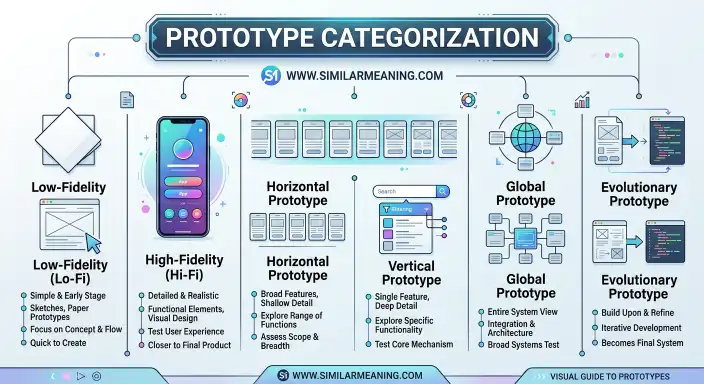
Possessive synonyms can be grouped by the ideas they express. This helps writers choose a word that fits the intended meaning.
- Control and authority: Controlling, domineering, authoritarian, and overbearing describe attempts to direct other people’s actions.
- Jealousy and insecurity: Jealous, envious, insecure, and suspicious describe feelings linked to fear, comparison, or doubt.
- Emotional attachment: Clingy, attached, and overattached focus on closeness and emotional dependence.
- Protection and safety: Protective and overprotective describe efforts to keep someone safe, though excessive protection may limit freedom.
- Ownership and desire: Covetous, acquisitive, and proprietary relate to wanting, gaining, or claiming possessions.
- Self focused behavior: Selfish and self centered describe putting one’s own needs first.
- Limits on freedom: Restrictive and inhibiting describe actions or conditions that limit another person’s choices.
- Keeping or collecting things: Hoarding relates to keeping large quantities of belongings rather than sharing or letting them go.
- Grammar and ownership: In grammar, possessive is best explained with terms such as ownership marking or showing possession, rather than with emotional words like jealous.
Categorization helps writers avoid using words that only partly match their meaning. For example, jealous describes an emotion, controlling describes behavior, and protective can describe a helpful intention. The best synonym depends on the situation.
Antonyms of Possessive
Antonyms are words with opposite or contrasting meanings. The most suitable opposite depends on if possessive describes control, jealousy, ownership, or emotional attachment.
- Generous (adjective): Willing to give or share with others.
- Sharing (adjective): Willing to let others use or enjoy something.
- Selfless (adjective): Putting other people’s needs before one’s own.
- Unselfish (adjective): Not focused only on personal interests.
- Trusting (adjective): Willing to believe that another person is honest.
- Secure (adjective): Feeling confident and safe rather than fearful or uncertain.
- Independent (adjective): Able to act or make decisions without depending too much on others.
- Open minded (adjective): Willing to consider different ideas and viewpoints.
- Respectful (adjective): Showing regard for other people’s rights, needs, and choices.
- Noncontrolling (adjective): Not trying to control another person’s behavior.
- Detached (adjective): Not strongly emotionally involved; this is an opposite in some contexts, but it does not always mean healthy independence.
- Unattached (adjective): Not emotionally connected to a particular person or thing.
Short Questions and Answers
- What does possessive mean?
Possessive describes a desire to own or control something or someone. In grammar, it describes words or forms that show ownership or relationships. - When should possessive be used?
Use it when describing ownership, controlling behavior, emotional attachment, or grammatical possession. Choose the meaning that fits the sentence. - Is possessive positive or negative?
It is often negative when describing controlling behavior. In grammar, it is neutral. When discussing care or safety, protective may express a more positive meaning. - How is possessive different from similar words?
Jealous describes a feeling, controlling describes behavior, clingy describes a strong need for closeness, and protective describes a wish to keep someone safe. - What is the best synonym for possessive?
Controlling is useful when someone tries to direct another person’s actions. Jealous is better for feelings of rivalry or fear of losing attention. - What is the opposite of possessive?
Depending on the context, opposites include sharing, generous, trusting, and noncontrolling. - Can possessive be used in grammar?
Yes. Words such as my, your, and their, along with forms such as Sarah’s, can show possession or relationships.
Conclusion
Learning possessive synonyms helps you express ownership, jealousy, attachment, and control more accurately. Words such as controlling, jealous, clingy, protective, and covetous have different meanings and emotional tones.
Choosing the right word improves vocabulary, makes writing more precise, and strengthens everyday speaking. It also helps you avoid repetition in essays, stories, articles, and conversations. Remember that these words are not always interchangeable.
For example, protective can describe care, while controlling usually suggests an attempt to limit someone’s freedom. In grammar, possessive has a separate, neutral meaning related to ownership. Practise a few synonyms each day, read their example sentences, and write your own. Regular practice will help you understand subtle differences, communicate clearly, and build confidence in English.
Discover More Articles!
Sweetheart Synonyms: 30 Words for Every Meaning
Confused Synonyms: 30 Words to Express Confusion
Synonyms for Learns: 30 Words With Meanings and Examples

Justin Cord Hayes is an Adams Media author and co-author of several vocabulary and thesaurus books. His work focuses on synonyms, antonyms, word choice, and expanding English vocabulary. He co-authored Roget’s Thesaurus of Words for Writers, Roget’s Thesaurus of Words for Students, and Roget’s Thesaurus of Words for Intellectuals. His books are designed to help readers find clearer and more effective words for writing and communication.