Storage means keeping things in a safe place or system so they can be used later. For example, you may need storage for clothes, books, or household items. A business may need storage for goods, while a computer needs storage to save files and documents. The word is common in daily life, business, education, and technology.
Learning synonyms of storage helps you explain ideas in different ways. It also helps English learners build vocabulary and helps content writers avoid using the same word again and again. However, each synonym has a slightly different meaning. Some words describe a physical place, while others refer to keeping, protecting, or saving information.
In this guide, you will learn 30 synonyms of storage, their meanings, pronunciations, and examples. You will also explore the word’s history, grammar, categories, and antonyms to understand how to use it correctly.
Meaning of Storage
Definition
Storage (Noun): The act of keeping something in a place or system for future use.
Examples
- We need more storage space for our books.
- My computer has enough storage for all my documents.
Connotative Meaning
Connotation means the feelings or ideas that a word suggests beyond its basic meaning.
- Positive tone: Organization, safety, convenience, and protection.
- Negative tone: Clutter, wasted space, and extra costs.
- Neutral tone: Keeping items or information for future use.
Etymology of Storage
Origin of the Word
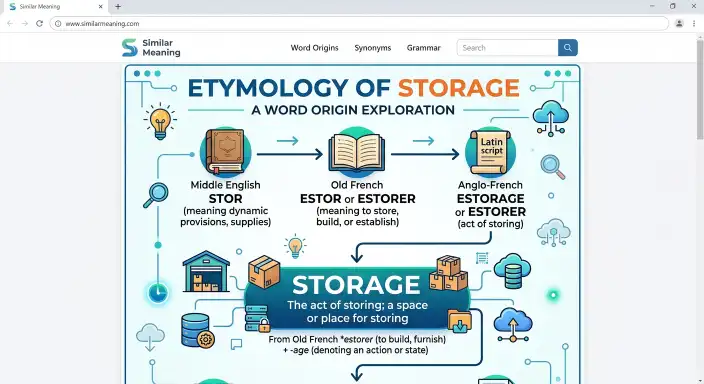
- Source language: The word storage comes from English store combined with the suffix age.
- Original meaning: It refers to the act, process, or space associated with keeping things.
- Related origin: The word store entered English through Old French and Anglo French, with a more distant connection to Latin instaurare, meaning to renew or restore.
Short History of Storage
- Old English (450–1100): The modern word storage was not yet established. Other words described keeping goods and supplies.
- Middle English (1100–1500): The word store developed through French influence and referred to supplies, goods, and provisions.
- Modern English (1500–Present): Storage became widely used for keeping physical goods and materials. Today, it also describes computer storage, digital files, and cloud storage.
Pronunciation of Storage
US and UK Pronunciation
- US IPA: /ˈstɔːrɪdʒ/
- UK IPA: /ˈstɔːrɪdʒ/
Syllables
stor age — 2 syllables.
Affixation Pattern of Storage
Root, Prefix, and Suffix
- Root: Store
- Prefix: None.
- Suffix: age, which can form nouns related to an action, process, or result.
Word Formation of Storage
- Store (noun): A place where goods are sold or kept.
- Store (verb): To keep something for future use.
- Storage (noun): The act or space used for keeping things.
- Stored (verb/adjective): Kept for future use.
- Storing (verb): The act of keeping something.
- Storehouse (noun): A building used to keep goods.
- Storage related (adjective): Connected with the keeping of items or information.
Synonyms of Storage
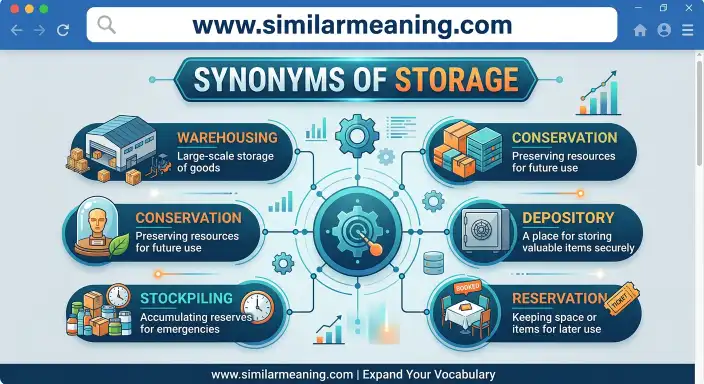
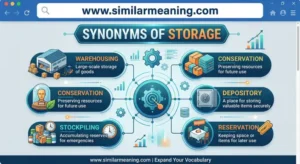
The following 30 words are related to storage. Some are close synonyms, while others are suitable alternatives in specific contexts.
1. Storing (Noun/Verb)
US IPA: /ˈstɔːrɪŋ/ | UK IPA: /ˈstɔːrɪŋ/
Meaning: The act of keeping something for future use.
Examples:
- Storing food properly helps keep it fresh.
- Storing files online makes them easy to access.
2. Warehousing (Noun)
US IPA: /ˈwerˌhaʊzɪŋ/ | UK IPA: /ˈweəˌhaʊzɪŋ/
Meaning: The process of keeping goods in a warehouse until they are needed.
Examples:
- Warehousing helps businesses manage their products.
- The company reduced its warehousing costs.
3. Stockpiling (Noun/Verb)
US IPA: /ˈstɑːkˌpaɪlɪŋ/ | UK IPA: /ˈstɒkˌpaɪlɪŋ/
Meaning: The act of collecting and keeping large amounts of supplies for future use.
Examples:
- Stockpiling supplies can help during emergencies.
- The factory began stockpiling materials before winter.
4. Safekeeping (Noun)
US IPA: /ˈseɪfˌkiːpɪŋ/ | UK IPA: /ˈseɪfˌkiːpɪŋ/
Meaning: The act of protecting something by keeping it in a safe place.
Examples:
- I gave my documents to my uncle for safekeeping.
- The bank offers safekeeping for valuable items.
5. Preservation (Noun)
US IPA: /ˌprezərˈveɪʃən/ | UK IPA: /ˌprezəˈveɪʃən/
Meaning: The act of keeping something in good condition or preventing its loss.
Examples:
- Proper preservation protects old books.
- Food preservation helps reduce waste.
6. Retention (Noun)
US IPA: /rɪˈtenʃən/ | UK IPA: /rɪˈtenʃən/
Meaning: The act of keeping or holding something instead of losing or releasing it.
Examples:
- Data retention rules explain how long files are kept.
- Water retention affects how soil behaves.
7. Keeping (Noun/Verb)
US IPA: /ˈkiːpɪŋ/ | UK IPA: /ˈkiːpɪŋ/
Meaning: The act of holding or maintaining something for future use.
Examples:
- Keeping papers in one folder saves time.
- Keeping food in a cool place helps it last longer.
8. Holding (Noun/Verb)
US IPA: /ˈhoʊldɪŋ/ | UK IPA: /ˈhəʊldɪŋ/
Meaning: The act of keeping something in your possession or under your control.
Examples:
- The warehouse is holding the goods until delivery.
- The company arranged the safe holding of important records.
9. Repository (Noun)
US IPA: /rɪˈpɑːzəˌtɔːri/ | UK IPA: /rɪˈpɒzɪtəri/
Meaning: A place or system where files, information, or items are collected and kept.
Examples:
- The website is a repository of research papers.
- Our team stores its code in a shared repository.
10. Storehouse (Noun)
US IPA: /ˈstɔːrˌhaʊs/ | UK IPA: /ˈstɔːˌhaʊs/
Meaning: A building or place where goods and supplies are kept.
Examples:
- The farmers moved their grain into the storehouse.
- The old storehouse contains tools and equipment.
11. Warehouse (Noun)
US IPA: /ˈwerˌhaʊs/ | UK IPA: /ˈweəhaʊs/
Meaning: A large building used to keep goods before they are sold or delivered.
Examples:
- The company rents a warehouse near the port.
- Workers moved the boxes into the warehouse.
12. Depot (Noun)
US IPA: /ˈdiːpoʊ/ | UK IPA: /ˈdepəʊ/
Meaning: A place where goods, vehicles, or supplies are kept.
Examples:
- The delivery trucks returned to the depot.
- The town has a depot for building materials.
13. Stockroom (Noun)
US IPA: /ˈstɑːkˌruːm/ | UK IPA: /ˈstɒkˌruːm/
Meaning: A room where a shop or business keeps extra goods.
Examples:
- The assistant brought more shirts from the stockroom.
- New products are kept in the stockroom until needed.
14. Cache (Noun)
US IPA: /kæʃ/ | UK IPA: /kæʃ/
Meaning: A collection of items or data kept for quick access or future use.
Examples:
- The browser stores website data in a cache.
- The hikers found a cache of emergency supplies.
15. Archive (Noun/Verb)
US IPA: /ˈɑːrkaɪv/ | UK IPA: /ˈɑːkaɪv/
Meaning: A collection of records kept for future reference, or the act of moving records into such a collection.
Examples:
- The library has an archive of historical letters.
- We archive old emails for future reference.
16. Data Repository (Noun)
US IPA: /ˈdeɪtə rɪˈpɑːzəˌtɔːri/ | UK IPA: /ˈdeɪtə rɪˈpɒzɪtəri/
Meaning: An organized system used to collect and keep digital data.
Examples:
- The university maintains a data repository for research.
- The data repository makes information easier to find.
17. Accumulation (Noun)
US IPA: /əˌkjuːmjəˈleɪʃən/ | UK IPA: /əˌkjuːmjʊˈleɪʃən/
Meaning: The gradual gathering of items, materials, or information over time.
Examples:
- The accumulation of old files filled the cabinet.
- Snow accumulation blocked the entrance.
18. Reserve (Noun)
US IPA: /rɪˈzɝːv/ | UK IPA: /rɪˈzɜːv/
Meaning: A supply of something kept for future needs.
Examples:
- The hospital maintains a reserve of medical supplies.
- We keep a reserve of food for emergencies.
19. Stock (Noun)
US IPA: /stɑːk/ | UK IPA: /stɒk/
Meaning: A supply of goods or materials kept for use or sale.
Examples:
- The shop keeps extra stock in the back room.
- The company checked its stock before placing an order.
20. Inventory (Noun)
US IPA: /ˈɪnvənˌtɔːri/ | UK IPA: /ˈɪnvəntri/
Meaning: A list or record of goods and supplies held by a person or business.
Examples:
- The manager updated the inventory after delivery.
- We checked the inventory to find missing items.
21. Containment (Noun)
US IPA: /kənˈteɪnmənt/ | UK IPA: /kənˈteɪnmənt/
Meaning: The act of keeping something within a defined space or boundary.
Examples:
- Safe containment is important when handling chemicals.
- The box provides containment for small parts.
22. Housing (Noun)
US IPA: /ˈhaʊzɪŋ/ | UK IPA: /ˈhaʊzɪŋ/
Meaning: A structure or enclosure designed to hold or protect an object or component.
Examples:
- The device has a strong housing for its internal parts.
- The metal housing protects the storage unit.
23. Compartment (Noun)
US IPA: /kəmˈpɑːrtmənt/ | UK IPA: /kəmˈpɑːtmənt/
Meaning: A separate section or space used to hold particular items.
Examples:
- This compartment is designed for small tools.
- She kept her documents in a separate compartment.
24. Locker (Noun)
US IPA: /ˈlɑːkər/ | UK IPA: /ˈlɒkə/
Meaning: A small, usually lockable space used to keep personal belongings.
Examples:
- I left my schoolbag in the locker.
- The gym provides lockers for its members.
25. Cupboard (Noun)
US IPA: /ˈkʌbərd/ | UK IPA: /ˈkʌbəd/
Meaning: A piece of furniture with doors and shelves used for keeping items.
Examples:
- The cups are stored in the kitchen cupboard.
- She placed the cleaning products in a cupboard.
26. Stash (Noun/Verb)
US IPA: /stæʃ/ | UK IPA: /stæʃ/
Meaning: A collection of items kept in a particular place, often secretly.
Examples:
- He kept a stash of spare batteries in a drawer.
- We found a stash of old photographs in the attic.
27. Filing (Noun)
US IPA: /ˈfaɪlɪŋ/ | UK IPA: /ˈfaɪlɪŋ/
Meaning: The process of arranging and keeping documents so they can be found later.
Examples:
- Proper filing keeps office documents organized.
- Digital filing makes records easier to search.
28. Data Bank (Noun)
US IPA: /ˈdeɪtə bæŋk/ | UK IPA: /ˈdeɪtə bæŋk/
Meaning: An organized collection of data kept for reference or use.
Examples:
- Researchers used a data bank to compare results.
- The organization maintains a data bank of public records.
29. Memory (Noun)
US IPA: /ˈmeməri/ | UK IPA: /ˈmeməri/
Meaning: A part of a computer or device that holds data and instructions for use.
Examples:
- The phone has enough memory for everyday tasks.
- More memory can help a computer run several programs.
30. Vault (Noun)
US IPA: /vɔːlt/ | UK IPA: /vɔːlt/
Meaning: A secure room or container used to protect valuable items or information.
Examples:
- The bank keeps valuable documents in a vault.
- The company stores sensitive digital records in a secure vault.
Prototype Meaning of Storage
The most common meaning of storage is the act of keeping something in a place or system until it is needed. People often imagine cupboards, boxes, warehouses, or computer drives when they hear the word. Storage can refer to physical objects, business supplies, personal belongings, or digital information. For example, a warehouse provides space for goods, while a computer drive stores files. The exact meaning depends on the context. Understanding this basic idea helps readers select the most suitable synonym for their writing.
Prototype Categorization of Storage Synonyms
Physical Storage
- Warehouse: A large building for keeping goods.
- Storehouse: A building for supplies.
- Depot: A place for goods or vehicles.
- Stockroom: A room for extra products.
- Cupboard: Furniture used to keep household items.
- Locker: A secure space for personal belongings.
- Compartment: A separate section for holding items.
- Vault: A secure place for valuables.
Digital Storage
- Repository: A place or system for collecting files and information.
- Data repository: A system for organized digital data.
- Cache: Data kept for quick access.
- Archive: Records kept for future reference.
- Data bank: An organized collection of information.
- Memory: A computer component or system that holds data.
Keeping and Protection
- Storing: Keeping something for future use.
- Keeping: Maintaining possession of something.
- Holding: Keeping something under control.
- Safekeeping: Protecting something in a safe place.
- Preservation: Maintaining something in good condition.
- Retention: Continuing to keep something.
- Containment: Keeping something within a boundary.
- Housing: An enclosure that holds or protects a component.
Business and Supplies
- Warehousing: Keeping goods in warehouses.
- Stockpiling: Collecting supplies for future use.
- Stock: Goods kept for sale or use.
- Inventory: A record of goods and supplies.
- Reserve: A supply saved for future needs.
- Accumulation: The gradual gathering of items.
- Stash: A collection kept in a particular place.
Organization and Records
- Filing: Arranging documents for future access.
Categorization helps writers choose words that fit their subject. For example, warehouse is suitable for a physical building, while cache is appropriate for quickly accessible digital data. Choosing a precise synonym makes writing clearer and more natural.
Antonyms of Storage
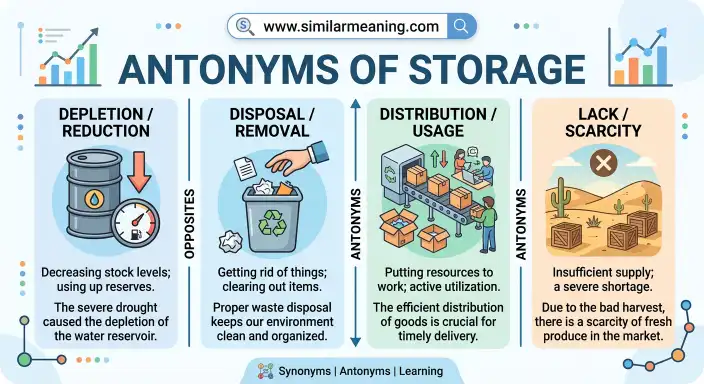
Storage has no single opposite in every situation. However, these words describe actions that can contrast with keeping or saving things.
1. Retrieval (Noun)
Meaning: The act of getting something back from storage.
2. Release (Noun/Verb)
Meaning: The act of allowing something to leave a place or system.
3. Removal (Noun)
Meaning: The act of taking something away from its current location.
4. Disposal (Noun)
Meaning: The act of getting rid of something that is no longer needed.
5. Deletion (Noun)
Meaning: The act of removing stored digital information.
6. Extraction (Noun)
Meaning: The act of taking something out of a place or system.
7. Distribution (Noun)
Meaning: The act of delivering or spreading goods among different people or places.
8. Consumption (Noun)
Meaning: The act of using up food, materials, or other resources.
9. Emptying (Noun/Verb)
Meaning: The act of removing the contents of a container or space.
10. Depletion (Noun)
Meaning: The reduction of a supply through use or loss.
Short Questions and Answers
- What does storage mean?
Storage means keeping items, supplies, or information in a place or system for future use. - When should storage be used?
Use storage when discussing the act, space, or system used to keep things. It is common in homes, businesses, and technology. - Is storage positive or negative?
Storage is generally neutral. Depending on the context, it can suggest organization and safety or clutter and extra costs. - How is storage different from similar words?
Storage is a broad term. Warehousing refers to keeping goods in warehouses, preservation focuses on maintaining condition, and retention emphasizes continuing to keep something. - What is the closest synonym for storage?
Storing is a close alternative when referring to the act of keeping something. Other choices depend on the context. - What is the difference between storage and inventory?
Storage refers to keeping items or information. Inventory usually refers to a list or record of goods held by a person or business. - Can storage refer to digital information?
Yes. Digital storage means saving files, images, documents, and other information on devices or online systems. - What is the difference between a cache and an archive?
A cache keeps data for quick access, while an archive keeps records for longer term reference. - Is warehouse a synonym for storage?
Not exactly. A warehouse is a physical building, while storage is the broader act, space, or system used to keep things. - Why should English learners study storage synonyms?
Learning these words improves vocabulary, reduces repetition, and helps learners express ideas more clearly.
Conclusion
Learning the synonyms of storage can improve your English vocabulary and communication skills. Words such as warehouse, repository, retention, preservation, and inventory describe different aspects of keeping things. Understanding their meanings helps you select the right word for each situation.
Using synonyms also strengthens writing and speaking by reducing repetition and making your ideas clearer. Students, bloggers, and content writers can use these words in essays, articles, business documents, and everyday conversations. However, remember that related words do not always have exactly the same meaning. Always consider the context before replacing one word with another.
To build confidence, practise learning a few new words every day. Write simple sentences, check pronunciation, and use the words in real conversations. With regular practice, you can expand your vocabulary and become a more confident English user.
Discover More Articles!
Synonyms for Perceive: Best Words to Improve Your Vocabulary
Synonyms for Opened: 30 Powerful Words to Improve Your Vocabulary
Synonyms of Recognize: Best Words to Improve Your Vocabulary

Justin Cord Hayes is an Adams Media author and co-author of several vocabulary and thesaurus books. His work focuses on synonyms, antonyms, word choice, and expanding English vocabulary. He co-authored Roget’s Thesaurus of Words for Writers, Roget’s Thesaurus of Words for Students, and Roget’s Thesaurus of Words for Intellectuals. His books are designed to help readers find clearer and more effective words for writing and communication.



1 thought on “Synonyms of Storage: 30 Words to Improve Your Vocabulary”