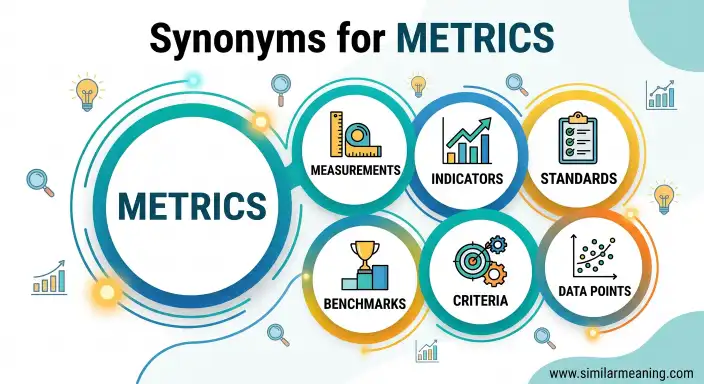
Metrics are measurements or values used to track progress, measure performance, and understand results. For example, a website owner may use traffic metrics to see how many people visit a website. A teacher may use student performance metrics to check learning progress. Businesses also use metrics to measure sales, customer satisfaction, and growth.
The word metrics is common in business, marketing, education, science, and technology. Learning synonyms for metrics helps English learners understand different situations and express ideas more clearly. It also helps bloggers, students, and content writers avoid repeating the same word in articles and reports.
However, not every synonym has exactly the same meaning. Some words refer to numbers, while others describe standards, measurements, or signs of progress. This guide explains the meaning, pronunciation, history, and grammar of metrics. It also covers 30 related words with simple definitions and examples to help you choose the right word.
Meaning of Metrics
Definition
Metrics (Noun, plural): Measurements or numerical values used to track, compare, or evaluate performance, progress, quality, or results.
Examples
- Website metrics help us understand visitor behavior.
- The company uses sales metrics to measure its progress.
Connotative Meaning
(Connotation means the feelings or ideas a word suggests beyond its basic meaning.)
- Positive tone: Progress, success, improvement, and clear results.
- Negative tone: Pressure, excessive monitoring, or too much focus on numbers.
- Neutral tone: Measurements or values used to evaluate something.
Etymology of Metrics
Origin of the Word
- Source language: Metrics is related to the Greek word metron, meaning “measure.”
- Word development: The English word metric developed through forms related to measurement and the metric system.
- Modern meaning: In current English, metrics commonly refers to measurements used to evaluate performance, results, and progress.
Short History of Metrics
- Old English (450–1100): The modern word metrics was not established. People used other words to describe measuring quantities and comparing results.
- Middle English (1100–1500): English adopted more vocabulary from French and Latin, including words connected with measurement and mathematics.
- Modern English (1500–Present): Metric became associated with measurement systems and the study of poetic rhythm. In modern business and technology, metrics also refers to numerical indicators used to track performance.
Pronunciation of Metrics
US and UK Pronunciation
- US IPA: /ˈmetrɪks/
- UK IPA: /ˈmetrɪks/
Syllables
met rics — 2 syllables.
Affixation Pattern of Metrics
Root, Prefix, and Suffix
- Root: metr , associated with measurement.
- Prefix: None.
- Suffix: ic forms the adjective metric. The final s marks the plural noun metrics.
Word Formation of Metrics
- Metre (noun, British English): A unit of length.
- Meter (noun, American English): A unit of length or a device that measures something.
- Metric (noun): A measurement or standard used for evaluation.
- Metric (adjective): Related to measurement or the metric system.
- Metrics (plural noun): Measurements or values used to evaluate results.
- Measurement (noun): The act or result of measuring something.
- Measure (verb/noun): To find the size, amount, or degree of something.
- Measurable (adjective): Able to be measured.
Synonyms for Metrics
The following 30 words are related to metrics. Some are close alternatives, while others fit specific situations, such as business reports, website analysis, scientific research, or performance reviews.
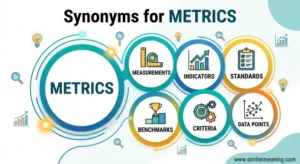
1. Measurements (Noun, Plural)
US IPA: /ˈmeʒərmənts/ | UK IPA: /ˈmeʒəmənts/
Meaning: Values that show the size, amount, level, or degree of something.
Examples:
- We recorded the measurements before starting the project.
- These measurements help us compare the results.
2. Indicators (Noun, Plural)
US IPA: /ˈɪndɪˌkeɪtərz/ | UK IPA: /ˈɪndɪˌkeɪtəz/
Meaning: Signs or values that show a condition, trend, or level of performance.
Examples:
- Customer satisfaction is an important indicator of business success.
- The report includes indicators of economic growth.
3. Statistics (Noun, Plural)
US IPA: /stəˈtɪstɪks/ | UK IPA: /stəˈtɪstɪks/
Meaning: Numerical facts or data collected and analyzed to understand something.
Examples:
- The website statistics show an increase in visitors.
- We reviewed the statistics before making a decision.
4. Data Points (Noun, Plural)
US IPA: /ˈdeɪtə pɔɪnts/ | UK IPA: /ˈdeɪtə pɔɪnts/
Meaning: Individual pieces of information used in an analysis.
Examples:
- Each data point represents one customer’s response.
- The researcher collected hundreds of data points.
5. Benchmarks (Noun, Plural)
US IPA: /ˈbentʃˌmɑːrks/ | UK IPA: /ˈbentʃˌmɑːks/
Meaning: Standards or reference points used to compare performance.
Examples:
- The team uses industry benchmarks to evaluate its results.
- Our sales exceeded last year’s benchmarks.
6. Key Performance Indicators (Noun Phrase, Plural)
US IPA: /kiː pərˈfɔːrməns ˈɪndɪˌkeɪtərz/ | UK IPA: /kiː pəˈfɔːməns ˈɪndɪˌkeɪtəz/
Meaning: Important measurements used to track progress toward specific goals.
Examples:
- Sales growth is one of our key performance indicators.
- The manager reviews key performance indicators every month.
7. Measures (Noun, Plural)
US IPA: /ˈmeʒərz/ | UK IPA: /ˈmeʒəz/
Meaning: Values, methods, or standards used to assess an amount, quality, or result.
Examples:
- The school uses several measures to assess student progress.
- These measures help us evaluate service quality.
8. Data (Noun)
US IPA: /ˈdeɪtə/ | UK IPA: /ˈdeɪtə/
Meaning: Facts or information collected for study, analysis, or decision making.
Examples:
- The team collected data from customer surveys.
- We use data to understand changes in website traffic.
9. Figures (Noun, Plural)
US IPA: /ˈfɪɡjərz/ | UK IPA: /ˈfɪɡəz/
Meaning: Numbers that represent amounts, totals, or results.
Examples:
- The latest sales figures show steady growth.
- Please check the figures before publishing the report.
10. Statistics Based Indicators (Noun Phrase, Plural)
US IPA: /stəˈtɪstɪks beɪst ˈɪndɪˌkeɪtərz/ | UK IPA: /stəˈtɪstɪks beɪst ˈɪndɪˌkeɪtəz/
Meaning: Indicators calculated from numerical data to show patterns or performance.
Examples:
- The report uses statistics based indicators to compare regions.
- Statistics based indicators helped the team identify a trend.
11. Scores (Noun, Plural)
US IPA: /skɔːrz/ | UK IPA: /skɔːz/
Meaning: Numbers or points that show a level of achievement or performance.
Examples:
- The students improved their test scores.
- The customer satisfaction scores increased this month.
12. Rates (Noun, Plural)
US IPA: /reɪts/ | UK IPA: /reɪts/
Meaning: Values that show how often something happens or how one amount relates to another.
Examples:
- The website’s conversion rates improved.
- The company tracks employee retention rates.
13. Ratios (Noun, Plural)
US IPA: /ˈreɪʃioʊz/ | UK IPA: /ˈreɪʃiəʊz/
Meaning: Comparisons between two quantities expressed as a relationship.
Examples:
- The report compares costs and revenue ratios.
- We calculated the ratio of visitors to buyers.
14. Percentages (Noun, Plural)
US IPA: /pərˈsentɪdʒɪz/ | UK IPA: /pəˈsentɪdʒɪz/
Meaning: Values that express an amount as a part of one hundred.
Examples:
- The survey results are shown as percentages.
- The percentage of returning customers increased.
15. Quantitative Measures (Noun Phrase, Plural)
US IPA: /ˈkwɑːntəˌteɪtɪv ˈmeʒərz/ | UK IPA: /ˈkwɒntɪtətɪv ˈmeʒəz/
Meaning: Measurements expressed in numbers or quantities.
Examples:
- The study uses quantitative measures to compare results.
- Quantitative measures help track changes over time.
16. Performance Measures (Noun Phrase, Plural)
US IPA: /pərˈfɔːrməns ˈmeʒərz/ | UK IPA: /pəˈfɔːməns ˈmeʒəz/
Meaning: Measurements used to assess how well a person, team, or system performs.
Examples:
- The company reviews performance measures each quarter.
- These performance measures help identify areas for improvement.
17. Evaluation Criteria (Noun Phrase, Plural)
US IPA: /ɪˌvæljuˈeɪʃən kraɪˈtɪriə/ | UK IPA: /ɪˌvæljuˈeɪʃən kraɪˈtɪəriə/
Meaning: Standards used to judge the quality, value, or success of something.
Examples:
- The judges explained the evaluation criteria.
- We selected the best proposal using clear evaluation criteria.
18. Variables (Noun, Plural)
US IPA: /ˈveriəbəlz/ | UK IPA: /ˈveəriəbəlz/
Meaning: Factors or quantities that can change and may affect a result.
Examples:
- Researchers studied several variables in the experiment.
- Website traffic and loading time are important variables.
19. Dimensions (Noun, Plural)
US IPA: /dɪˈmenʃənz/ | UK IPA: /dɪˈmenʃənz/
Meaning: Different aspects or features used to understand or evaluate something.
Examples:
- The report examines several dimensions of customer experience.
- Quality and speed are two dimensions of service performance.
20. Readings (Noun, Plural)
US IPA: /ˈriːdɪŋz/ | UK IPA: /ˈriːdɪŋz/
Meaning: Values shown by a measuring device or instrument.
Examples:
- The machine recorded accurate temperature readings.
- The technician checked the meter readings.
21. Outputs (Noun, Plural)
US IPA: /ˈaʊtˌpʊts/ | UK IPA: /ˈaʊtˌpʊts/
Meaning: Results or quantities produced by a process, system, or activity.
Examples:
- The team compared the outputs of two systems.
- Monthly outputs increased after the upgrade.
22. Outcomes (Noun, Plural)
US IPA: /ˈaʊtˌkʌmz/ | UK IPA: /ˈaʊtˌkʌmz/
Meaning: Results or effects produced by an action, project, or process.
Examples:
- The school measures learning outcomes at the end of each term.
- The new strategy produced better outcomes.
23. Results (Noun, Plural)
US IPA: /rɪˈzʌlts/ | UK IPA: /rɪˈzʌlts/
Meaning: The effects or findings produced by an action or process.
Examples:
- The results show that customer engagement improved.
- We shared the results with the project team.
24. Trends (Noun, Plural)
US IPA: /trendz/ | UK IPA: /trendz/
Meaning: General patterns of change or development over time.
Examples:
- The metrics revealed trends in customer behavior.
- The company studies sales trends each month.
25. Ratios and Rates (Noun Phrase, Plural)
US IPA: /ˈreɪʃioʊz ænd reɪts/ | UK IPA: /ˈreɪʃiəʊz ænd reɪts/
Meaning: Numerical relationships and frequencies used to compare performance.
Examples:
- The analyst compared ratios and rates across departments.
- Ratios and rates helped explain the sales changes.
26. Quantifiers (Noun, Plural)
US IPA: /ˈkwɑːntəˌfaɪərz/ | UK IPA: /ˈkwɒntɪfaɪəz/
Meaning: Words, symbols, or values that express an amount or quantity.
Examples:
- The report uses quantifiers to describe the amount of data.
- Quantifiers help explain how much material is available.
27. Scorecards (Noun, Plural)
US IPA: /ˈskɔːrˌkɑːrdz/ | UK IPA: /ˈskɔːkɑːdz/
Meaning: Reports or tools that summarize performance using selected measures.
Examples:
- The manager reviewed the team’s performance scorecard.
- The scorecards compare results across several departments.
28. Benchmarks and Targets (Noun Phrase, Plural)
US IPA: /ˈbentʃˌmɑːrks ænd ˈtɑːrɡɪts/ | UK IPA: /ˈbentʃˌmɑːks ænd ˈtɑːɡɪts/
Meaning: Reference standards and desired results used to assess progress.
Examples:
- The team set benchmarks and targets for the next quarter.
- Our results were compared with industry benchmarks and targets.
29. Analytics (Noun)
US IPA: /ˌænəˈlɪtɪks/ | UK IPA: /ˌænəˈlɪtɪks/
Meaning: The systematic study of data to discover patterns and support decisions.
Examples:
- Website analytics help us understand visitor behavior.
- The company uses analytics to improve marketing campaigns.
30. Key Figures (Noun Phrase, Plural)
US IPA: /kiː ˈfɪɡjərz/ | UK IPA: /kiː ˈfɪɡəz/
Meaning: Important numbers that summarize performance, progress, or results.
Examples:
- The report highlights key figures from the last quarter.
- Managers reviewed the key figures before the meeting.
Prototype Meaning of Metrics
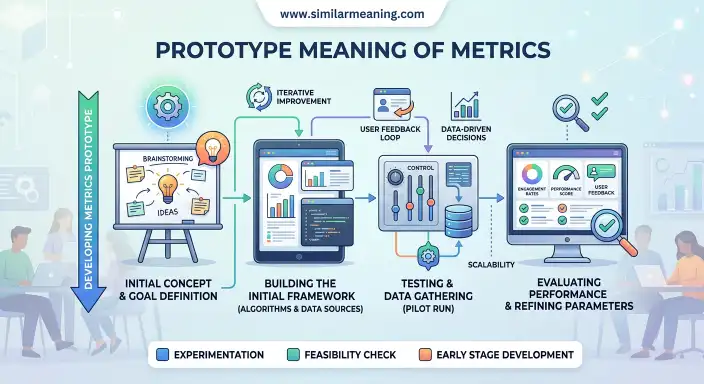
The most typical meaning of metrics is numerical measurements used to understand or evaluate performance. When people hear this word, they often think of numbers in reports, charts, dashboards, or business presentations. For example, website visitors, sales figures, conversion rates, and customer satisfaction scores can all be metrics. The exact meaning depends on the field. In marketing, metrics may track clicks and sales. In education, they may measure student progress. Understanding this central meaning helps writers choose a suitable synonym for each situation.
Prototype Categorization of Metrics Synonyms
Measurements and Numerical Values
- Measurements: Values that show size, amount, or degree.
- Figures: Numbers that represent totals or results.
- Data points: Individual pieces of collected information.
- Statistics: Numerical facts analyzed to understand a subject.
- Percentages: Values expressed as parts of one hundred.
- Ratios: Relationships between two quantities.
- Rates: Values showing frequency or proportion.
- Readings: Values recorded by measuring devices.
Performance and Progress
- Indicators: Signs of a condition or level of performance.
- Key performance indicators: Measures linked to important goals.
- Performance measures: Values used to assess performance.
- Scores: Numbers representing achievement or quality.
- Scorecards: Tools that summarize performance.
- Benchmarks: Standards used for comparison.
- Outcomes: Results or effects of an activity.
- Results: Findings produced by a process.
Data and Analysis
- Data: Facts collected for analysis.
- Analytics: The study of data to identify patterns.
- Variables: Factors that may change.
- Trends: Patterns of change over time.
- Quantitative measures: Measurements expressed numerically.
- Dimensions: Different aspects of a subject.
- Key figures: Important numbers that summarize results.
Standards and Evaluation
- Evaluation criteria: Standards used to judge something.
- Benchmarks and targets: Reference points and desired results.
- Measures: Methods or values used to assess a subject.
General Measurement Terms
- Quantifiers: Expressions of amount or quantity.
- Outputs: Quantities or results produced.
- Statistics based indicators: Indicators calculated from numerical data.
- Ratios and rates: Numerical relationships and frequencies.
Categorization helps writers choose the most accurate term for their subject. For example, indicators works well when describing signs of progress, while benchmarks is more suitable for comparing results against a standard. Using precise words improves clarity in business reports, academic writing, marketing articles, and everyday communication.
Antonyms of Metrics
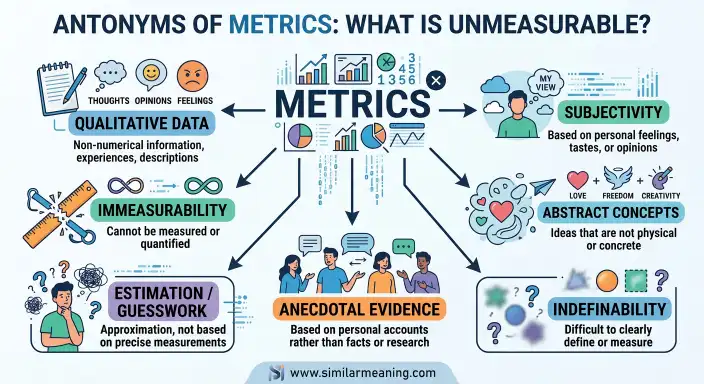
Metrics does not have one exact antonym because it refers to measurements or indicators. However, the following words describe ideas that contrast with numerical measurement or structured evaluation.
1. Guesswork (Noun)
Meaning: Making decisions without enough facts or reliable information.
2. Estimation (Noun)
Meaning: An approximate judgment of a value or amount rather than an exact measurement.
3. Subjectivity (Noun)
Meaning: Judging something mainly through personal feelings or opinions.
4. Intuition (Noun)
Meaning: Understanding or making a judgment based on instinct rather than detailed analysis.
5. Uncertainty (Noun)
Meaning: A state in which something is not known or cannot be predicted clearly.
6. Ambiguity (Noun)
Meaning: A lack of clear meaning or certainty.
7. Vagueness (Noun)
Meaning: A lack of specific or precise information.
8. Impression (Noun)
Meaning: A general feeling or opinion about something rather than a measured result.
9. Speculation (Noun)
Meaning: Forming ideas or opinions without enough evidence.
10. Inaccuracy (Noun)
Meaning: A lack of correctness or precision in information or measurement.
Short Questions and Answers
- What do metrics mean?
Metrics are measurements or numerical values used to track, compare, and evaluate performance or results. - When should metrics be used?
Use metrics when discussing measurements that help track progress, assess performance, or understand results. - Are metrics positive or negative?
Metrics are generally neutral. They can help people improve performance, but focusing too much on numbers may hide important details. - How are metrics different from similar words?
Metrics are measurements used for evaluation. Statistics are numerical facts, indicators signal a condition, and benchmarks provide standards for comparison. - What is another word for metrics?
Common alternatives include measurements, indicators, statistics, figures, and performance measures. The best choice depends on the context. - What is the difference between metrics and KPIs?
Metrics measure different aspects of performance. Key performance indicators, or KPIs, are the specific metrics selected to track important goals. - Are metrics and data the same?
No. Data is collected information, while metrics are measurements or values used to evaluate something. - What are examples of website metrics?
Examples include visitor numbers, page views, conversion rates, bounce rates, and average engagement time. - Why are metrics important in business?
Metrics help businesses track progress, compare results, identify problems, and make informed decisions. - Why should English learners study synonyms for metrics?
Learning related words improves vocabulary, reduces repetition, and helps learners communicate more accurately in academic and professional settings.
Conclusion
Learning synonyms for metrics can improve your vocabulary and help you communicate more clearly. Words such as measurements, indicators, statistics, benchmarks, and performance measures are useful in business, education, marketing, and research. However, each word has a specific meaning, so it is important to choose one that fits your context.
Using a wider range of vocabulary also strengthens writing and speaking. Students can use these words in assignments, while bloggers and content writers can make their articles more varied and precise. Understanding the differences between metrics, data, indicators, and benchmarks can also help you explain information more effectively.
To improve your English, practise a few new words every day. Write your own sentences, review their meanings, and use them in conversations. Regular practice will help you build vocabulary, avoid repetition, and become a more confident English user.
Discover More Articles!
Synonyms of Storage: 30 Words to Improve Your Vocabulary
Synonyms of Organized: Best Words to Improve Your Vocabulary
Synonyms for Perceive: Best Words to Improve Your Vocabulary

Justin Cord Hayes is an Adams Media author and co-author of several vocabulary and thesaurus books. His work focuses on synonyms, antonyms, word choice, and expanding English vocabulary. He co-authored Roget’s Thesaurus of Words for Writers, Roget’s Thesaurus of Words for Students, and Roget’s Thesaurus of Words for Intellectuals. His books are designed to help readers find clearer and more effective words for writing and communication.