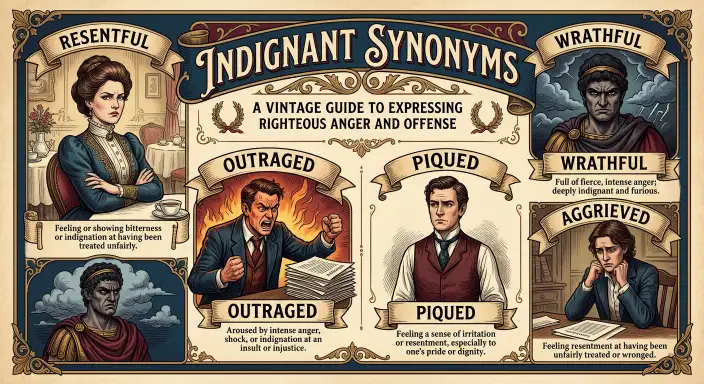
Indignant synonyms are words that describe feeling angry or upset because something seems unfair, insulting, or wrong.
Common synonyms for indignant include offended, outraged, resentful, displeased, aggrieved, and incensed. These words help you explain different levels of anger and show why someone feels that way.
Imagine a student who studies hard but is blamed for a mistake they did not make. The student may feel hurt and angry because the situation is unfair. You could describe the student as indignant.
Learning synonyms for indignant can help you express emotions more clearly in writing and everyday conversation. Some words describe mild displeasure, while others show strong anger about injustice or disrespect. Choosing the right word makes your message more accurate.
In this guide, you will discover 30 useful synonyms for indignant, learn their meanings, explore example sentences, and understand the differences between similar words. if you are writing an essay, improving your English, or describing an emotional reaction, these words will help you build a stronger vocabulary.
What Does Indignant Mean?
Indignant is an adjective that describes feeling angry or offended because something is unfair, unjust, or insulting.
An indignant person often believes they or someone else has been treated wrongly. This feeling is usually connected to a sense of justice, respect, or fairness.
Example: She was indignant when her coworker took credit for her work.
In this sentence, indignant shows that she felt angry because she believed the situation was unfair.
Indignant in Simple Words
In simple English, indignant means angry because something is unfair or wrong.
For example, if someone blames you for something you did not do, you might feel indignant.
Indignant: Part of Speech
Indignant is an adjective. It describes a person’s feelings or reaction.
- An indignant student
- An indignant response
- An indignant look
- An indignant protest
The noun form is indignation, which means anger caused by something considered unfair or wrong.
Example: He expressed his indignation at the unfair decision.
30 Best Synonyms for Indignant
Here are 30 words related to indignant, along with their simple meanings.
| No. | Synonym | Simple Meaning |
| 1 | Offended | Hurt or upset by someone’s words or actions |
| 2 | Outraged | Extremely angry about something wrong |
| 3 | Resentful | Feeling bitterness about unfair treatment |
| 4 | Angry | Feeling strong displeasure |
| 5 | Incensed | Extremely angry |
| 6 | Aggrieved | Feeling unfairly treated |
| 7 | Annoyed | Slightly angry or bothered |
| 8 | Displeased | Unhappy or dissatisfied |
| 9 | Irritated | Feeling bothered or impatient |
| 10 | Indignant | Angry because of unfairness |
| 11 | Furious | Extremely angry |
| 12 | Irate | Very angry |
| 13 | Enraged | Filled with intense anger |
| 14 | Disgruntled | Unhappy or dissatisfied, often because of unfair treatment |
| 15 | Bitter | Feeling lasting anger or resentment |
| 16 | Provoked | Made angry by someone’s actions |
| 17 | Insulted | Feeling disrespected |
| 18 | Upset | Unhappy, troubled, or distressed |
| 19 | Agitated | Emotionally disturbed or unsettled |
| 20 | Exasperated | Extremely annoyed or frustrated |
| 21 | Vexed | Annoyed or troubled |
| 22 | Disgruntled | Dissatisfied or resentful |
| 23 | Resentful | Bitter about a perceived wrong |
| 24 | Cross | Slightly angry, especially in British English |
| 25 | Incensed | Deeply angered by something |
| 26 | Hostile | Showing anger or opposition |
| 27 | Indignant hearted | Not a standard synonym; avoid using it in formal English |
| 28 | Disapproving | Showing that you think something is wrong |
| 29 | Appalled | Shocked and upset by something unacceptable |
| 30 | Wrathful | Filled with strong anger |
These words are related to indignant, but they are not all exact replacements. The best choice depends on if you want to emphasize unfairness, disrespect, frustration, or intense anger.
Best Indignant Synonyms With Examples
1. Offended
Offended describes feeling hurt or upset because someone has said or done something disrespectful.
Example: She felt offended when her opinion was ignored.
Use this word when the main issue is disrespect or hurt feelings.
2. Outraged
Outraged describes very strong anger about something considered wrong or unacceptable.
Example: Residents were outraged by the unfair new rule.
Use outraged when the situation causes intense anger, often because of injustice.
3. Resentful
Resentful describes lasting bitterness about unfair treatment or something unpleasant.
Example: He felt resentful after being blamed for another person’s mistake.
Use this word when anger continues over time.
4. Incensed
Incensed means extremely angry because of something someone has done.
Example: The manager was incensed by the dishonest report.
Use incensed when you want to express strong anger in a formal or descriptive way.
5. Aggrieved
Aggrieved describes someone who feels they have been treated unfairly.
Example: The aggrieved employee asked for a fair review.
Use this word when the focus is on a person’s complaint about unfair treatment.
6. Displeased
Displeased means unhappy or dissatisfied with something.
Example: The teacher was displeased with the careless work.
Use this word when the reaction is milder than strong indignation.
7. Irate
Irate means very angry.
Example: The irate customer asked to speak to the manager.
Use irate when you want to emphasize the intensity of someone’s anger.
8. Insulted
Insulted describes feeling disrespected by someone’s words or behavior.
Example: He felt insulted by the rude comment.
Use this word when the anger comes from a personal insult.
9. Exasperated
Exasperated describes feeling extremely annoyed or frustrated, often after repeated problems.
Example: She was exasperated by the repeated delays.
Use this word when frustration is stronger than ordinary annoyance.
10. Appalled
Appalled means shocked and deeply upset by something unacceptable.
Example: The audience was appalled by the unfair treatment.
Use appalled when shock and disapproval are as important as anger.
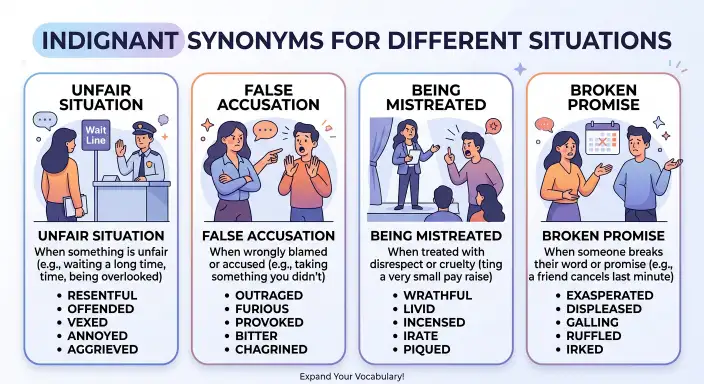
Indignant Synonyms for Different Situations
For Unfair Treatment
These words work well when someone feels that justice has not been done:
- Aggrieved
- Resentful
- Outraged
- Incensed
- Indignant
Example: The workers were outraged by the unfair decision.
For Disrespect or Insults
These words focus on how someone feels after being treated rudely:
- Offended
- Insulted
- Displeased
- Angry
- Irritated
Example: He felt insulted by the disrespectful remark.
For Strong Anger
These words express a high level of anger:
- Furious
- Irate
- Enraged
- Incensed
- Wrathful
Example: The community was furious about the dishonest decision.
For Mild Annoyance
These words describe less intense negative feelings:
- Annoyed
- Irritated
- Vexed
- Cross
- Displeased
Example: She was annoyed when the meeting started late.
Indignant vs. Outraged: What Is the Difference?
Indignant and outraged both describe anger about something wrong, but outraged usually suggests a stronger reaction.
| Word | Meaning | Example |
| Indignant | Angry because something seems unfair or insulting | He was indignant about the false accusation. |
| Outraged | Extremely angry about something unacceptable | Citizens were outraged by the corruption. |
Use indignant when you want to emphasize a sense of injustice. Use outraged when the anger is especially strong.
Resentful vs Indignant
These words are similar, but they focus on different aspects of anger.
- Indignant: Angry because something seems unfair or wrong.
- Resentful: Feeling bitterness about a wrong or unfair situation, sometimes for a long time.
Example: She was indignant when her idea was dismissed unfairly.
Example: He remained resentful about the decision for years.
Indignation can be an immediate reaction, while resentment may last much longer.
How to Use Indignant in a Sentence
Here are 10 simple sentences showing how to use indignant correctly.
- The student was indignant about the unfair accusation.
- She gave an indignant reply to the rude comment.
- He looked indignant when his work was criticized unfairly.
- The workers were indignant about the unequal treatment.
- My friend sounded indignant during the discussion.
- The customer became indignant after receiving false information.
- She was indignant when someone took credit for her idea.
- His indignant expression showed that he felt disrespected.
- The residents were indignant about the unfair policy.
- The coach was indignant when the players were blamed without evidence.
In each sentence, indignant describes anger connected to a perceived wrong, unfairness, or insult.
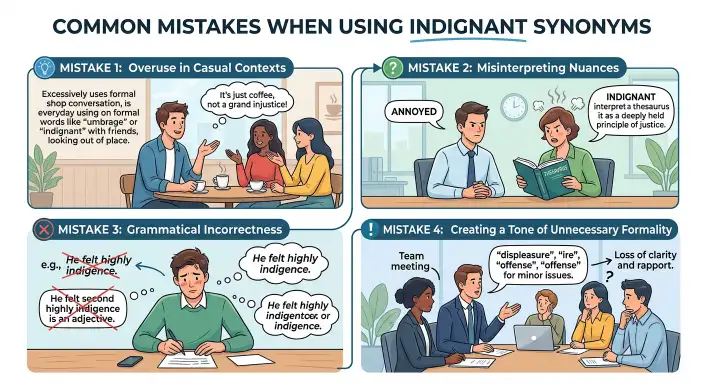
Common Mistakes When Using Indignant Synonyms
Treating Every Synonym as an Exact Match
Words related to indignant have different shades of meaning. Annoyed can describe mild frustration, while outraged suggests intense anger.
Choose a word that matches the strength of the feeling.
Confusing Indignant With Indifferent
These words have very different meanings.
- Indignant: Angry because something seems unfair.
- Indifferent: Not interested or not concerned.
Example: She was indignant about the unfair treatment.
Example: He was indifferent to the argument.
Using Indignant for Every Kind of Anger
Indignant usually involves a sense that something is unjust, insulting, or wrong. If someone is angry simply because they are tired or impatient, irritated or annoyed may be more accurate.
Confusing Indignant With Indignation
Indignant is an adjective, while indignation is a noun.
Correct: The teacher was indignant about the accusation.
Correct: The teacher expressed indignation about the accusation.
Why Learning Indignant Synonyms Matters
Learning synonyms helps you describe emotions with greater accuracy. Instead of repeating the word angry, you can choose a term that explains the reason or intensity of the feeling.
For example:
- Use offended when someone feels disrespected.
- Use aggrieved when someone believes they have been treated unfairly.
- Use resentful when bitterness continues over time.
- Use outraged when anger is very strong.
- Use exasperated when repeated problems cause frustration.
These differences can make essays, stories, workplace messages, and everyday conversations more expressive.
Frequently Asked Questions
1. What is the best synonym for indignant?
Some of the best synonyms are offended, outraged, aggrieved, incensed, and resentful. The right choice depends on the context.
2. What does indignant mean in simple English?
Indignant means angry or upset because something seems unfair, wrong, or insulting.
3. Is outraged the same as indignant?
They are similar, but outraged often expresses stronger anger. Indignant emphasizes the feeling that something is unjust or disrespectful.
4. What is the opposite of indignant?
Possible antonyms include pleased, satisfied, content, accepting, and untroubled. The best opposite depends on the sentence.
5. Is indignant a positive or negative word?
It describes a negative emotion, but it often suggests that someone is reacting to unfairness or wrongdoing.
6. What is the noun form of indignant?
The noun form is indignation, meaning anger caused by something considered unjust or offensive.
Example: The decision caused widespread indignation.
7. What is the adjective form of indignation?
The adjective is indignant.
Example: The indignant customer challenged the unfair charge.
8. Can indignant describe a person?
Yes. It can describe a person who feels angry about unfair treatment, an insult, or a perceived injustice.
Example: The indignant employee requested an explanation.
9. What is a formal synonym for indignant?
Formal alternatives include aggrieved, incensed, outraged, and indignant itself. Choose according to the meaning and intensity you want.
10. How can I remember the meaning of indignant?
Connect indignant with the phrase angry about injustice.
Conclusion
Indignant is a useful English word for describing anger caused by unfairness, disrespect, or wrongdoing. Its common synonyms include offended, outraged, resentful, incensed, aggrieved, and displeased. Each word adds a slightly different meaning to a sentence.
For example, offended focuses on hurt feelings, aggrieved emphasizes unfair treatment, and outraged expresses very strong anger. Resentful often describes bitterness that lasts over time, while exasperated focuses on frustration.
Learning these 30 synonyms can help you improve your vocabulary and express emotions more clearly. Start by practising a few words in your own sentences. Pay attention to why a person feels angry and how strong that feeling is. With regular practice, you will become better at choosing the right word for essays, conversations, and everyday writing.
Discover More Articles!
Affable Synonyms : 30 Friendly Words to Improve Your Vocabulary
30 Self-Confidence Synonyms: Meanings and Examples
Bad Habits Synonyms: 30 Useful Words for Better English

Justin Cord Hayes is an Adams Media author and co-author of several vocabulary and thesaurus books. His work focuses on synonyms, antonyms, word choice, and expanding English vocabulary. He co-authored Roget’s Thesaurus of Words for Writers, Roget’s Thesaurus of Words for Students, and Roget’s Thesaurus of Words for Intellectuals. His books are designed to help readers find clearer and more effective words for writing and communication.




1 thought on “Indignant Synonyms : 30 Powerful Words to Improve Your Vocabulary”