Self confidence means believing in your own abilities, judgment, and value. Imagine a student standing in front of a class to give a presentation.
Even if the student feels nervous, believing “I can do this” helps them speak clearly and stay calm. That feeling is self confidence.
People often use the phrase self confidence when talking about personal growth, communication, education, work, leadership, and success. However, repeating the same phrase can make your writing sound simple or repetitive. Learning synonyms gives you more ways to describe confidence, courage, self belief, and a strong sense of personal ability.
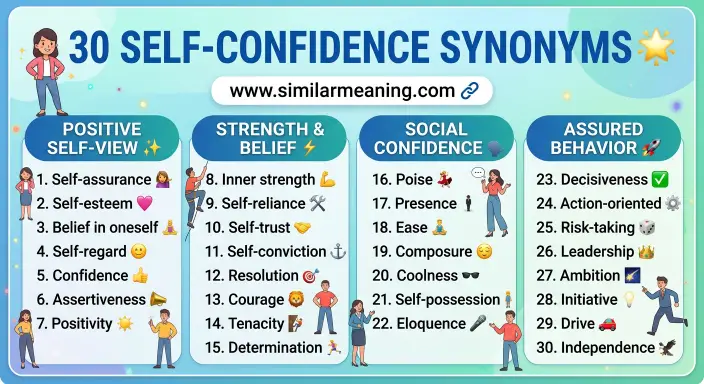
In this article, you will learn 30 useful synonyms and related words for self confidence. You will also learn their meanings, pronunciation, examples, emotional tone, word history, grammar, and semantic categories. These words can help English learners, students, writers, and content creators choose the right expression for different situations.
Meaning of Self Confidence
Definition
Self confidence (noun): A belief in your own abilities, qualities, decisions, or ability to deal with situations successfully.
Examples
- Her self confidence helped her speak clearly during the interview.
- Practice can improve your self confidence over time.
Connotative Meaning
Connotation means the feeling or idea that a word suggests beyond its basic meaning.
- Positive tone: Self confidence usually suggests belief, courage, ability, and emotional strength.
- Negative tone: Too much self confidence can sometimes suggest arrogance, pride, or overconfidence.
- Neutral tone: In general writing, self confidence simply describes belief in one’s own abilities.
Etymology of Self Confidence
Origin of “Self”
The word self has Germanic roots and has been used in English for many centuries to describe one’s own person or identity.
Origin of “Confidence”
The word confidence comes from Latin confidentia, related to confidere, meaning “to trust fully” or “to have firm faith.”
History
Old English: 450 1100
The modern phrase did not exist in its current form during Old English. The idea of the individual self was expressed through older Germanic words and structures.
Middle English: 1100 1500
Words related to trust, faith, and belief became more common through French and Latin influence on English.
Modern English: 1500 Present
Confidence developed into its modern meaning of trust in oneself, another person, or a particular outcome. The phrase self confidence became a common way to describe belief in one’s own abilities.
Pronunciation of Self Confidence
US and UK IPA
- US: /ˌself ˈkɑːnfɪdəns/
- UK: /ˌself ˈkɒnfɪdəns/
Syllables
Self confidence: self + con + fi + dence
The phrase is commonly pronounced with the main stress on confidence.
Affixation Pattern
Root
The main roots are self and confidence.
Prefix
There is no traditional prefix added to confidence in the phrase.
Suffix
Confidence contains the suffix ence, which forms a noun.
Word Formation
- self = one’s own person or identity
- confidence = trust or belief
- self confidence = belief in one’s own abilities
- confident = adjective
- confidently = adverb
- confidence = noun
Synonyms of Self Confidence
The following words are synonyms or closely related expressions. Some describe self confidence directly, while others describe a particular part or form of it.
1. Confidence (Noun)
US IPA: /ˈkɑːnfɪdəns/ | UK IPA: /ˈkɒnfɪdəns/
Meaning: A strong belief in your own ability, qualities, or judgment.
- Her confidence grew after months of practice.
- He spoke with confidence during the meeting.
2. Self Assurance (Noun)
US IPA: /ˌself əˈʃʊrəns/ | UK IPA: /ˌself əˈʃʊərəns/
Meaning: Calm and strong belief in your own abilities.
- Her self assurance impressed the interviewers.
- He answered the questions with self assurance.
3. Self Belief (Noun)
US IPA: /ˌself bɪˈliːf/ | UK IPA: /ˌself bɪˈliːf/
Meaning: Belief that you can succeed or handle difficult situations.
- Self belief helped her continue after failure.
- Strong self belief can encourage people to try new things.
4. Self Esteem (Noun)
US IPA: /ˌself ɪˈstiːm/ | UK IPA: /ˌself ɪˈstiːm/
Meaning: A person’s sense of their own value or worth.
- Positive feedback can support healthy self esteem.
- His self esteem improved when he recognized his progress.
5. Assurance (Noun)
US IPA: /əˈʃʊrəns/ | UK IPA: /əˈʃʊərəns/
Meaning: A feeling of certainty and confidence in yourself or something.
- She answered the question with assurance.
- His assurance made the presentation sound convincing.
6. Poise (Noun)
US IPA: /pɔɪz/ | UK IPA: /pɔɪz/
Meaning: Calm and controlled confidence, especially in difficult situations.
- She handled the difficult question with poise.
- His poise helped him stay calm on stage.
7. Assertiveness (Noun)
US IPA: /əˈsɝːtɪvnəs/ | UK IPA: /əˈsɜːtɪvnəs/
Meaning: The ability to express your needs and opinions clearly and confidently.
- Assertiveness helped her explain her concerns.
- Good assertiveness allows people to communicate without being aggressive.
8. Self Reliance (Noun)
US IPA: /ˌself rɪˈlaɪəns/ | UK IPA: /ˌself rɪˈlaɪəns/
Meaning: The ability to depend on your own skills and judgment.
- Learning new skills can build self reliance.
- His self reliance helped him solve the problem alone.
9. Boldness (Noun)
US IPA: /ˈboʊldnəs/ | UK IPA: /ˈbəʊldnəs/
Meaning: A willingness to act or speak with confidence.
- Her boldness helped her share a new idea.
- It took boldness to ask that difficult question.
10. Courage (Noun)
US IPA: /ˈkɜːrɪdʒ/ | UK IPA: /ˈkʌrɪdʒ/
Meaning: The ability to face fear, difficulty, or uncertainty.
- It takes courage to admit a mistake.
- His courage helped him speak in front of a large audience.
11. Composure (Noun)
US IPA: /kəmˈpoʊʒər/ | UK IPA: /kəmˈpəʊʒə/
Meaning: A calm and controlled state, especially under pressure.
- She maintained her composure during the interview.
- His composure made him appear confident.
12. Conviction (Noun)
US IPA: /kənˈvɪkʃən/ | UK IPA: /kənˈvɪkʃən/
Meaning: A strong belief that something is true or right.
- She spoke with conviction about her idea.
- His conviction gave strength to his argument.
13. Certainty (Noun)
US IPA: /ˈsɜːrtənti/ | UK IPA: /ˈsɜːtənti/
Meaning: A strong feeling that something is true or will happen.
- He answered with certainty.
- Her certainty made the decision easier.
14. Nerve (Noun)
US IPA: /nɜːrv/ | UK IPA: /nɜːv/
Meaning: Courage or confidence to deal with a difficult situation.
- It took nerve to speak in front of everyone.
- She had the nerve to challenge the unfair decision.
15. Aplomb (Noun)
US IPA: /əˈplɑːm/ | UK IPA: /əˈplɒm/
Meaning: Calm confidence when dealing with a difficult situation.
- He answered the unexpected question with aplomb.
- She handled the pressure with remarkable aplomb.
16. Audacity (Noun)
US IPA: /ɔːˈdæsəti/ | UK IPA: /ɔːˈdæsəti/
Meaning: Bold confidence that can sometimes seem surprising or rude.
- Her audacity helped her challenge the old idea.
- His audacity surprised everyone in the room.
17. Fearlessness (Noun)
US IPA: /ˈfɪərləsnəs/ | UK IPA: /ˈfɪələsnəs/
Meaning: A lack of fear when facing challenges.
- Her fearlessness encouraged the team.
- His fearlessness helped him try something new.
18. Decisiveness (Noun)
US IPA: /dɪˈsaɪsɪvnəs/ | UK IPA: /dɪˈsaɪsɪvnəs/
Meaning: The ability to make decisions confidently and quickly.
- Her decisiveness helped the team move forward.
- Good leaders often need decisiveness.
19. Independence (Noun)
US IPA: /ˌɪndɪˈpendəns/ | UK IPA: /ˌɪndɪˈpendəns/
Meaning: The ability to act or make decisions without depending heavily on others.
- University life can develop independence.
- His independence made him comfortable working alone.
20. Dignity (Noun)
US IPA: /ˈdɪɡnəti/ | UK IPA: /ˈdɪɡnəti/
Meaning: A calm sense of self respect and worth.
- She responded to the criticism with dignity.
- He maintained his dignity during the difficult conversation.
21. Optimism (Noun)
US IPA: /ˈɑːptɪmɪzəm/ | UK IPA: /ˈɒptɪmɪzəm/
Meaning: A positive belief that good things can happen.
- Her optimism gave the team hope.
- Optimism can make difficult situations feel more manageable.
22. Self Faith (Noun)
US IPA: /ˌself ˈfeɪθ/ | UK IPA: /ˌself ˈfeɪθ/
Meaning: Strong trust in your own ability and potential.
- Self faith helped him continue learning.
- She developed greater self faith after overcoming challenges.
23. Empowerment (Noun)
US IPA: /ɪmˈpaʊərmənt/ | UK IPA: /ɪmˈpaʊəmənt/
Meaning: A feeling of having the ability, control, or power to act.
- Education can provide a sense of empowerment.
- The new responsibility gave her greater empowerment.
24. Presence (Noun)
US IPA: /ˈprezəns/ | UK IPA: /ˈprezəns/
Meaning: A noticeable quality of confidence and control that a person shows.
- The speaker had a strong presence on stage.
- Her calm presence made the room feel more relaxed.
25. Charisma (Noun)
US IPA: /kəˈrɪzmə/ | UK IPA: /kəˈrɪzmə/
Meaning: A natural ability to attract and influence people.
- His charisma made him an engaging speaker.
- Her charisma helped her connect with the audience.
26. Gumption (Noun)
US IPA: /ˈɡʌmpʃən/ | UK IPA: /ˈɡʌmpʃən/
Meaning: Courage, energy, and determination to take action.
- It takes gumption to start something completely new.
- Her gumption helped her solve the problem.
27. Fortitude (Noun)
US IPA: /ˈfɔːrtətuːd/ | UK IPA: /ˈfɔːtɪtjuːd/
Meaning: Strength and courage during difficult experiences.
- He showed great fortitude during the challenge.
- Her fortitude helped her keep going.
28. Bravery (Noun)
US IPA: /ˈbreɪvəri/ | UK IPA: /ˈbreɪvəri/
Meaning: The quality of being willing to face danger, fear, or difficulty.
- Her bravery inspired her classmates.
- It takes bravery to admit when you are wrong.
29. Sangfroid (Noun)
US IPA: /sɒŋˈfrwɑː/ | UK IPA: /sɒŋˈfrwɑː/
Meaning: Calmness and self control during stressful situations.
- He showed remarkable sangfroid during the crisis.
- Her sangfroid helped everyone remain calm.
30. Swagger (Noun)
US IPA: /ˈswæɡər/ | UK IPA: /ˈswæɡə/
Meaning: A very confident way of behaving that can sometimes appear arrogant.
- He walked into the room with swagger.
- Her confident style had a little swagger.
Prototype Meaning
The prototype meaning of self confidence is a strong belief in your own abilities, decisions, and personal value. The clearest examples are confidence, self assurance, self belief, and self esteem.
Some related words describe only one part of self confidence. For example, poise focuses on calm behavior, courage focuses on facing fear, and assertiveness focuses on expressing yourself clearly. This difference matters because synonyms are not always perfect replacements.
Prototype Categorization
Direct Confidence Synonyms
- Confidence
- Self assurance
- Self belief
- Assurance
- Self esteem
These are closest to the basic meaning of self confidence.
Calm Confidence
- Poise
- Composure
- Aplomb
- Sangfroid
- Presence
These words are useful when confidence is shown through calm behavior.
Courage and Boldness
- Courage
- Boldness
- Nerve
- Fearlessness
- Bravery
- Gumption
- Fortitude
- Audacity
These words focus more on acting despite fear or difficulty.
Personal Independence
- Self reliance
- Independence
- Empowerment
- Decisiveness
These terms describe confidence connected with action, decisions, or personal control.
Positive Personal Qualities
- Dignity
- Optimism
- Charisma
- Conviction
These words describe qualities that can make confidence visible or influential.
Strong or Excessive Confidence
- Swagger
- Audacity
These words can have a negative or critical tone depending on context. Swagger, especially, may suggest that someone is showing off.
Antonyms of Self Confidence
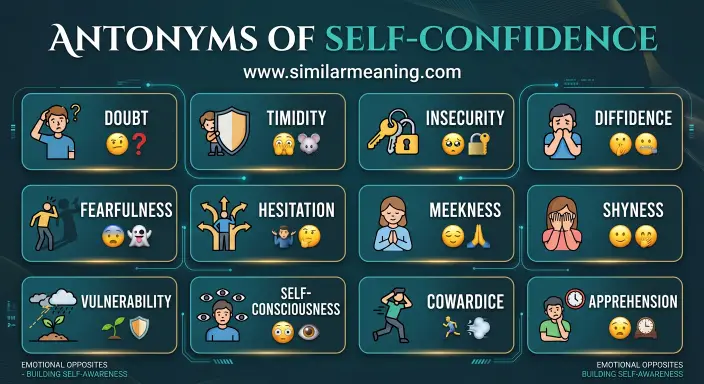
Self Doubt (Noun)
Meaning: A lack of belief in your own abilities or decisions.
Insecurity (Noun)
Meaning: A feeling of uncertainty or lack of confidence in yourself.
Timidity (Noun)
Meaning: A lack of courage or confidence when dealing with people or situations.
Uncertainty (Noun)
Meaning: A lack of confidence about what is true, right, or likely to happen.
Hesitation (Noun)
Meaning: A delay caused by uncertainty or lack of confidence.
Self Distrust (Noun)
Meaning: A lack of trust in your own judgment or abilities.
Short Questions and Answers
- What is the best synonym for self confidence?
Confidence, self assurance, and self belief are among the closest choices. - Is self esteem the same as self confidence?
They are related, but self esteem focuses more on how you value yourself, while self confidence focuses more on what you believe you can do. - What is a synonym for confidence in speaking?
Assertiveness, poise, assurance, and composure can work depending on the context. - What is a synonym for strong self confidence?
Self assurance, self belief, conviction, and confidence are useful choices. - What is the opposite of self confidence?
Self doubt, insecurity, timidity, and self distrust are common opposites. - Is boldness a synonym for self confidence?
It can be a related synonym when confidence is shown through brave or direct action. - Is arrogance the same as self confidence?
No. Self confidence is belief in yourself, while arrogance can involve feeling superior to others. - What is a formal word for self confidence?
Self assurance, poise, aplomb, and composure can sound more formal depending on the sentence. - What word describes calm confidence?
Poise, composure, aplomb, and sangfroid are useful words. - Why learn synonyms for self confidence?
They help writers avoid repetition and express different shades of confidence more accurately.
Conclusion
Self confidence is the belief that you can handle situations, make decisions, and use your abilities effectively. English has many words that express this idea, but each one can carry a slightly different meaning or emotional tone.
Confidence, self assurance, and self belief are close direct synonyms. Words such as poise and composure focus on calm behavior, while courage, bravery, and boldness focus on facing challenges. Self esteem is related but focuses more on personal value.
Learning these differences can make your English more precise and natural. Instead of using “self confidence” in every sentence, you can choose a word that matches your exact meaning. This is especially useful for students, ESL learners, bloggers, writers, and content creators who want stronger vocabulary and clearer communication.
Discover More Articles!
67 Meaning : Spelling, Facts, and How to Write It Correctly
Immigration or Emigration: What Is the Difference?
Tweeking or Tweaking: Which Spelling Is Correct?(2026)

Justin Cord Hayes is an Adams Media author and co-author of several vocabulary and thesaurus books. His work focuses on synonyms, antonyms, word choice, and expanding English vocabulary. He co-authored Roget’s Thesaurus of Words for Writers, Roget’s Thesaurus of Words for Students, and Roget’s Thesaurus of Words for Intellectuals. His books are designed to help readers find clearer and more effective words for writing and communication.

2 thoughts on “30 Self-Confidence Synonyms: Meanings and Examples”