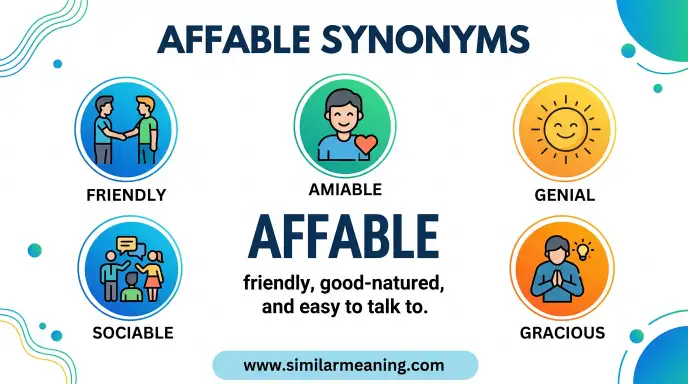
Affable means friendly, pleasant, and easy to talk to, so useful synonyms include approachable, sociable, amiable, cordial, genial, warm, and congenial. These words can describe someone who makes conversations feel comfortable and welcoming.
Imagine meeting someone for the first time and feeling relaxed within a few minutes. They smile, listen carefully, speak kindly, and make conversation feel natural. You might describe that person as affable.
This adjective is useful in everyday English, professional writing, character descriptions, and conversations about personality. However, not every synonym has exactly the same meaning. Some focus on friendliness, while others suggest warmth, politeness, kindness, or a strong ability to socialize.
In this guide, you will learn 30 useful alternatives, their meanings, pronunciation, tone, examples, and the situations where each word works best.
What Does Affable Mean?
Affable describes someone who is friendly, pleasant, approachable, and easy to talk to.
Definition and Meaning
Affable
Pronunciation: /ˈæfəbəl/
Part of speech: Adjective
Meaning: Friendly and pleasant, especially in a way that makes conversation easy.
Example:
“Her affable personality made everyone feel welcome.”
The word usually has a positive tone. Calling someone affable suggests that they are pleasant to interact with and do not make others feel uncomfortable.
Is affable a positive word?
Yes. Affable is normally a positive word. It praises someone’s friendly and approachable personality.
30 Affable Synonyms
1. Friendly
Meaning: Kind, pleasant, and welcoming toward others.
Pronunciation: /ˈfrendli/
Tone: Neutral and positive.
Example:
“Our new teacher is very friendly.”
Best for: Everyday conversations.
2. Approachable
Meaning: Easy to approach, speak to, or ask for help.
Pronunciation: /əˈproʊtʃəbəl/
Tone: Positive and professional.
Example:
“The manager is friendly and approachable.”
Best for: Workplaces, schools, and professional descriptions.
3. Amiable
Meaning: Pleasant, friendly, and good-natured.
Pronunciation: /ˈeɪmiəbəl/
Tone: Polished and positive.
Example:
“He has an amiable personality.”
Best for: Formal writing and personality descriptions.
4. Sociable
Meaning: Enjoying talking to and spending time with other people.
Pronunciation: /ˈsoʊʃəbəl/
Tone: Neutral and positive.
Example:
“She is naturally sociable and enjoys meeting new people.”
Best for: Describing outgoing people.
5. Genial
Meaning: Cheerful, friendly, and pleasant.
Pronunciation: /ˈdʒiːniəl/
Tone: Warm and slightly formal.
Example:
“The host was genial and welcoming.”
Best for: Formal descriptions and writing.
6. Cordial
Meaning: Polite, warm, and friendly.
Pronunciation: /ˈkɔːrdiəl/
Tone: Formal and professional.
Example:
“They maintained cordial relations with their neighbors.”
Best for: Professional relationships and formal communication.
7. Warm
Meaning: Friendly, kind, and emotionally welcoming.
Pronunciation: /wɔːrm/
Tone: Warm and positive.
Example:
“She gave us a warm welcome.”
Best for: Personal and emotional descriptions.
8. Welcoming
Meaning: Making people feel comfortable, accepted, and wanted.
Pronunciation: /ˈwelkəmɪŋ/
Tone: Positive.
Example:
“The staff were extremely welcoming.”
Best for: People, places, events, and organizations.
9. Good-natured
Meaning: Naturally kind, calm, and pleasant.
Pronunciation: /ˌɡʊd ˈneɪtʃərd/
Tone: Friendly and positive.
Example:
“His good-natured attitude made disagreements easier to handle.”
Best for: Describing personality.
10. Pleasant
Meaning: Nice, enjoyable, or agreeable.
Pronunciation: /ˈplezənt/
Tone: Neutral and positive.
Example:
“She is a pleasant person to work with.”
Best for: General descriptions.
11. Kind
Meaning: Caring, helpful, and considerate toward others.
Pronunciation: /kaɪnd/
Tone: Positive and simple.
Example:
“He was kind to everyone he met.”
Best for: Everyday English.
12. Courteous
Meaning: Polite and respectful toward others.
Pronunciation: /ˈkɜːrtiəs/
Tone: Formal and positive.
Example:
“The receptionist was courteous and helpful.”
Best for: Professional situations.
13. Polite
Meaning: Showing good manners and respect.
Pronunciation: /pəˈlaɪt/
Tone: Neutral and positive.
Example:
“She was polite and respectful during the discussion.”
Best for: Formal and everyday communication.
14. Congenial
Meaning: Pleasant and compatible with others.
Pronunciation: /kənˈdʒiːniəl/
Tone: Formal and polished.
Example:
“They developed a congenial working relationship.”
Best for: Professional and formal writing.
15. Companionable
Meaning: Pleasant and comfortable to spend time with.
Pronunciation: /kəmˈpænjənəbəl/
Tone: Warm and literary.
Example:
“He was a companionable person who enjoyed long conversations.”
Best for: Descriptions of friendships and companionship.
16. Outgoing
Meaning: Friendly, confident, and comfortable meeting people.
Pronunciation: /ˈaʊtɡoʊɪŋ/
Tone: Informal and positive.
Example:
“My brother is outgoing and makes friends easily.”
Best for: Social personality descriptions.
17. Extroverted
Meaning: Energetic and comfortable around other people.
Pronunciation: /ˈekstrəvɜːrtɪd/
Tone: Neutral and descriptive.
Example:
“She is naturally extroverted and enjoys group activities.”
Best for: Personality discussions.
18. Sociable-minded
Meaning: Inclined to interact easily with other people.
Pronunciation: /ˈsoʊʃəbəl maɪndɪd/
Tone: Neutral.
Example:
“He is sociable-minded and enjoys working with teams.”
Best for: General personality descriptions, although “sociable” is more natural in most situations.
19. Neighborly
Meaning: Friendly, helpful, and kind toward people around you.
Pronunciation: /ˈneɪbərli/
Tone: Warm and informal.
Example:
“The community showed a neighborly spirit.”
Best for: Communities and relationships.
20. Hospitable
Meaning: Friendly and generous toward guests or visitors.
Pronunciation: /hɒˈspɪtəbəl/
Tone: Positive and somewhat formal.
Example:
“The family was extremely hospitable.”
Best for: Hosts, homes, hotels, and cultural descriptions.
21. Gracious
Meaning: Kind, polite, and pleasantly considerate.
Pronunciation: /ˈɡreɪʃəs/
Tone: Formal and elegant.
Example:
“She was gracious to every guest.”
Best for: Formal writing and respectful descriptions.
22. Agreeable
Meaning: Pleasant, cooperative, and easy to get along with.
Pronunciation: /əˈɡriːəbəl/
Tone: Neutral and positive.
Example:
“He is an agreeable person who rarely creates conflict.”
Best for: Personality and social situations.
23. Genial-hearted
Meaning: Warm, kind, and friendly in character.
Pronunciation: /ˈdʒiːniəl ˌhɑːrtɪd/
Tone: Warm and descriptive.
Example:
“The genial-hearted host welcomed everyone.”
Best for: Creative descriptions. “Genial” is much more common in everyday English.
24. Cheerful
Meaning: Happy, positive, and pleasant.
Pronunciation: /ˈtʃɪəfəl/
Tone: Positive and informal.
Example:
“Her cheerful personality brightened the room.”
Best for: Positive personality descriptions.
25. Kindhearted
Meaning: Having a naturally kind and caring personality.
Pronunciation: /ˌkaɪndˈhɑːrtɪd/
Tone: Warm and positive.
Example:
“He is a kindhearted person who often helps others.”
Best for: Character descriptions.
26. Good-humored
Meaning: Cheerful, friendly, and able to remain pleasant.
Pronunciation: /ˌɡʊd ˈhjuːmərd/
Tone: Positive and conversational.
Example:
“She remained good-humored during the difficult meeting.”
Best for: Describing someone’s attitude.
27. Easygoing
Meaning: Relaxed, calm, and easy to deal with.
Pronunciation: /ˌiːziˈɡoʊɪŋ/
Tone: Informal and positive.
Example:
“My new roommate is easygoing and friendly.”
Best for: Casual conversations.
28. Affectionate
Meaning: Showing warmth, care, or fondness toward others.
Pronunciation: /əˈfekʃənət/
Tone: Warm and positive.
Example:
“She has an affectionate relationship with her family.”
Best for: Close relationships. It is not always a direct synonym for affable.
29. Personable
Meaning: Pleasant, attractive, and easy to talk to.
Pronunciation: /ˈpɜːrsənəbəl/
Tone: Positive and professional.
Example:
“The candidate was confident and personable.”
Best for: Interviews, workplaces, and social descriptions.
30. Agreeable-natured
Meaning: Naturally pleasant and easy to get along with.
Pronunciation: /əˈɡriːəbəl ˈneɪtʃərd/
Tone: Formal and descriptive.
Example:
“His agreeable-natured personality made him popular with the team.”
Best for: Formal character descriptions. “Agreeable” or “good-natured” is usually more natural.
Best Synonyms for Affable by Context
Not every alternative works equally well in every sentence.
| Context | Best Synonyms |
|---|---|
| Everyday conversation | Friendly, kind, pleasant |
| Professional writing | Approachable, personable, cordial |
| Formal writing | Amiable, genial, gracious |
| Social personality | Sociable, outgoing, extroverted |
| Warm personality | Warm, welcoming, kindhearted |
| Easy to work with | Approachable, agreeable, congenial |
| Hospitality | Welcoming, hospitable, gracious |
| Relaxed personality | Easygoing, good-natured |
| Friendship | Companionable, warm, friendly |
| Character description | Amiable, genial, personable |
Affable vs Friendly
Affable and friendly are very close in meaning, but “affable” often emphasizes being easy and pleasant to talk to.
Friendly:
“She is friendly to everyone.”
Affable:
“His affable manner made conversation easy.”
“Friendly” is more common in everyday English, while “affable” can sound more polished.
Affable vs Amiable
Both words describe pleasant people.
Amiable emphasizes a pleasant and good-natured character.
Affable emphasizes being friendly and easy to approach or talk to.
Example:
- “She has an amiable nature.”
- “He has an affable manner.”
Both are positive, but the focus is slightly different.
Affable and Approachable
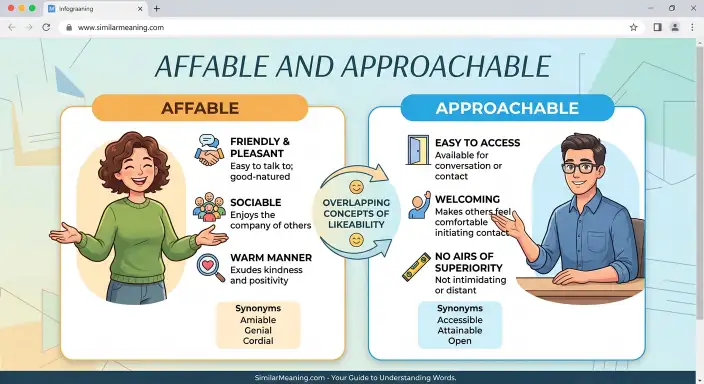
Approachable means easy to approach or speak to.
Affable means friendly and pleasant in conversation.
Someone can be approachable because they are open and accessible, while an affable person usually has a naturally pleasant social manner.
Affable or Sociable
Sociable describes someone who enjoys spending time with other people.
Affable focuses more on how pleasant and friendly that person is during interaction.
A person can be sociable without necessarily being especially affable.
Common Mistakes With Affable Synonyms
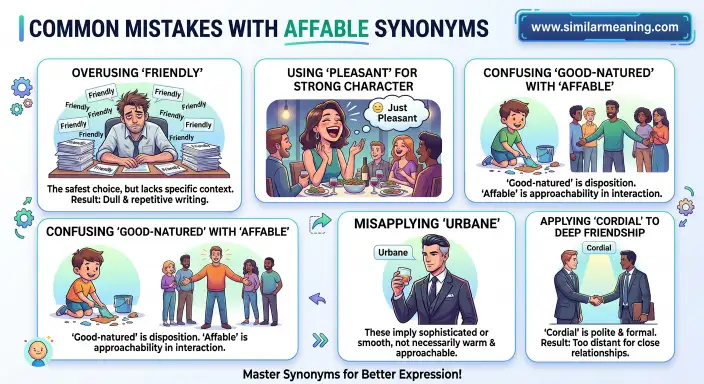
Mistake 1: Assuming every synonym has exactly the same meaning
Synonyms often overlap, but their meanings are not always identical.
For example, cordial often emphasizes polite friendliness, while outgoing emphasizes social confidence.
Mistake 2: Using “extroverted” as a perfect replacement
An extroverted person may enjoy social situations, but that does not automatically mean they are affable.
Mistake 3: Confusing “affable” with “affectionate”
These words sound somewhat similar but have different meanings.
Affable = friendly and easy to talk to.
Affectionate = showing fondness or emotional warmth.
Mistake 4: Using formal words in casual situations
Words such as amiable, genial, and cordial can sound more formal than simple alternatives such as “friendly.”
Mistake 5: Thinking affable means talkative
An affable person is pleasant and approachable, but they do not have to be highly talkative.
How to Use Affable in a Sentence
Here are some natural examples:
- “The doctor was calm and affable.”
- “Our new neighbor is very affable.”
- “His affable personality helped him make friends quickly.”
- “The manager has an affable manner.”
- “She remained affable throughout the interview.”
- “Everyone appreciated his affable nature.”
Affable Synonyms for Formal Writing
If you are writing an essay, report, biography, or professional profile, these alternatives can work well:
- Approachable
- Amiable
- Cordial
- Genial
- Personable
- Congenial
- Gracious
- Pleasant
For example:
Basic:
“He is friendly and easy to talk to.”
More polished:
“He is personable and approachable.”
Affable Synonyms for Casual Writing
In everyday conversations, these words sound more natural:
- Friendly
- Nice
- Warm
- Cheerful
- Easygoing
- Kind
- Sociable
- Welcoming
For example:
“She is really friendly and easygoing.”
This sounds more natural in casual conversation than using a highly formal synonym.
10 People Also Ask Questions
1. What is the best synonym for affable?
Friendly is the simplest everyday synonym, while amiable, approachable, genial, and personable can work depending on context.
2. What does affable mean in simple words?
Affable means friendly, pleasant, and easy to talk to.
3. Is affable a positive word?
Yes. It usually describes someone in a positive way.
4. What is a formal synonym for affable?
Amiable, genial, cordial, gracious, and personable can work in formal contexts.
5. Is approachable a synonym for affable?
Yes, they overlap. Both can describe someone who is easy and pleasant to talk to.
6. What is the opposite of affable?
Possible opposites include unfriendly, hostile, unpleasant, aloof, and unapproachable.
7. Is affable the same as friendly?
They are very similar. Affable often emphasizes a pleasant and easy conversational manner.
8. What is the difference between affable and amiable?
Affable focuses more on being easy to talk to, while amiable emphasizes a pleasant and good-natured personality.
9. Can affable describe a woman?
Yes. “Affable” can describe anyone who has a friendly and pleasant manner.
10. What is a good synonym for affable in an interview?
Personable or approachable can work especially well in a professional interview context.
FAQs
What is the strongest synonym for affable?
There is no single strongest synonym. Amiable, approachable, personable, and friendly are among the closest choices.
Is affable a formal word?
Affable is somewhat more polished than “friendly,” but it is still a normal English word.
Can affable describe a personality?
Yes. You can describe someone as having an affable personality, manner, nature, or character.
What is the opposite of an affable person?
An unfriendly, hostile, aloof, cold, or unapproachable person can be described as the opposite, depending on the context.
What is the easiest word to replace affable?
The easiest replacement is friendly.
Which synonym is best for professional writing?
Approachable and personable are especially useful for professional writing, while cordial works well when describing polite relationships.
Quick Guide to Affable Synonyms
If you want a simple replacement, choose friendly.
You want a professional word, choose approachable or personable.
If you want a formal word, choose amiable or genial.
You want to describe someone who enjoys socializing, choose sociable or outgoing.
If you want to emphasize kindness, choose kindhearted or good-natured.
If you want to describe a relaxed personality, choose easygoing.
The best synonym depends on what part of the person’s personality you want to emphasize.
Conclusion
Affable is a useful adjective for describing someone who is friendly, pleasant, approachable, and easy to talk to. While “friendly” is the simplest synonym, words such as amiable, approachable, genial, cordial, personable, sociable, welcoming, and good-natured can provide more precise meanings.
The right choice depends on context. Use “friendly” in everyday conversation, “approachable” in professional settings, “amiable” or “genial” in polished writing, and “sociable” when you want to emphasize someone’s enjoyment of social interaction.
Learning these alternatives can make your English more varied and precise. Instead of repeating “friendly” in every sentence, you can choose a word that communicates the exact quality you want to describe.
Discover More Articles!
Strep or Tonsillitis: What Is the Difference?(2026)
Volume or Volumn: Which Spelling Is Correct?(2026)
Preventative or Preventive: Which One Is Correct?(2026)

Justin Cord Hayes is an Adams Media author and co-author of several vocabulary and thesaurus books. His work focuses on synonyms, antonyms, word choice, and expanding English vocabulary. He co-authored Roget’s Thesaurus of Words for Writers, Roget’s Thesaurus of Words for Students, and Roget’s Thesaurus of Words for Intellectuals. His books are designed to help readers find clearer and more effective words for writing and communication.


2 thoughts on “Affable Synonyms : 30 Friendly Words to Improve Your Vocabulary”